

SPECIAL REPORT
DIAMONDS
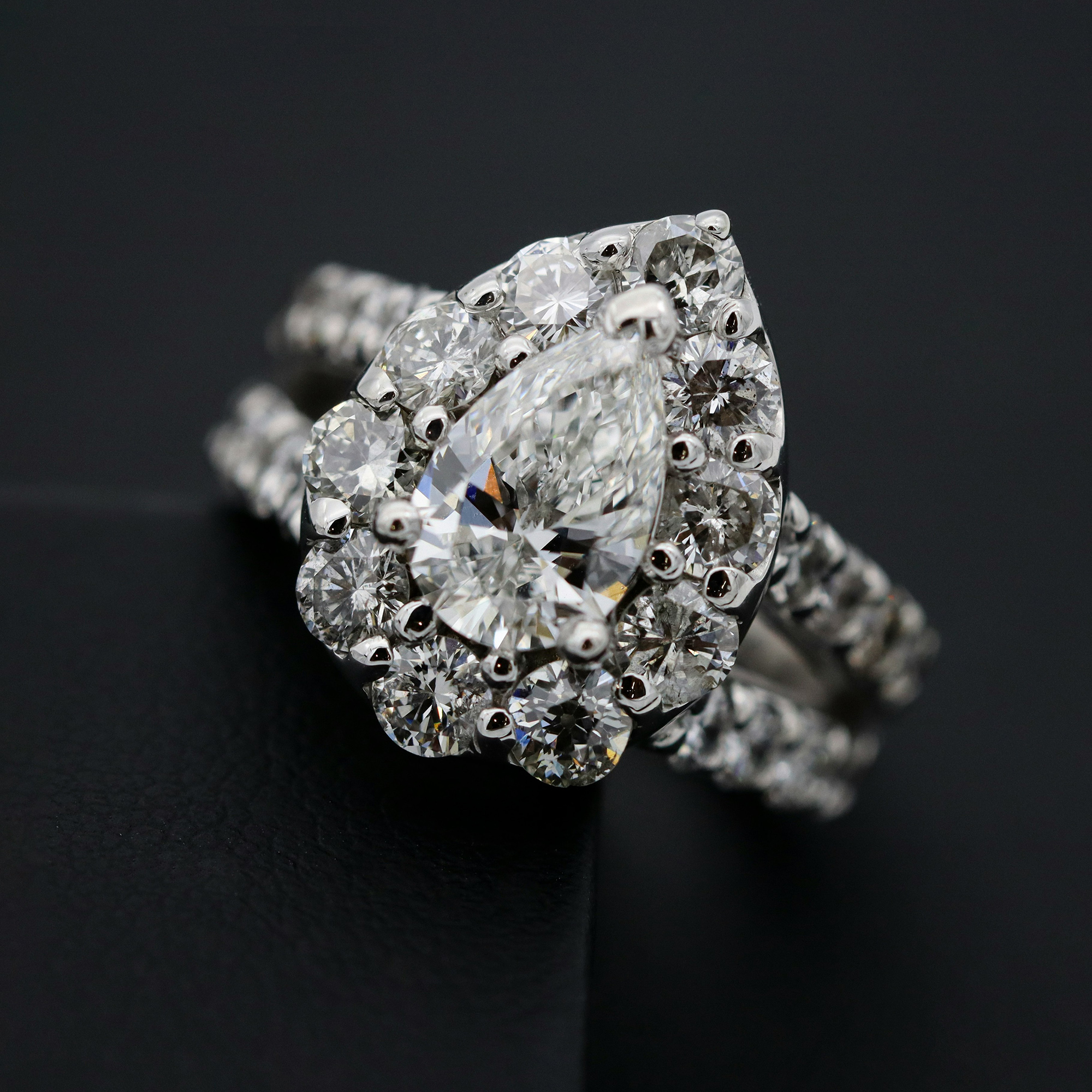
Photo credit: Sabrianna on Unsplash.com.
The language of the diamond trade
Why scientific integrity and consumer confidence require a reassessment of synthetic diamonds nomenclature

By Udi Sheintal
President
CIBJO Diamond Commission
This special report is a collective effort, much of it being offered as a contribution to the ongoing discussion within CIBJO and across the diamond industry about the principles that should guide synthetic diamonds nomenclature. But, at the start of CIBJO’s second century of standards-setting, it is not the only subject we touch upon.
Allow me to thank my colleagues who have given generously of their time to the work of the Diamond Commission in general, and more specifically to the compiling of this report. Your efforts are all greatly appreciated.
For almost one hundred years, CIBJO has served as the guardian of the language of the jewellery industry. Every revision of the Blue Books has been guided by one overriding objective, and that is that consumers should be able to rely upon terminology that is scientifically accurate, internationally consistent, and free from commercial ambiguity.
As CIBJO approaches its Centenary, it is appropriate to ask whether the terminology we use today continues to fulfil that mission.
During last 2025 CIBJO congress in Paris, the Diamond Committee recommended revisiting and revising the Diamond Blue Book by removing the terms “laboratory-grown” and ‘laboratory-created” as synonyms for synthetic.” We advocated that a synthetic diamond should be labelled clearly and consistently as such — just as we do with synthetic emeralds, sapphires, and rubies.
Following that decision, the Diamond Commission Steering Committee (DCSC) met a few times during the year, to discuss the new amended Diamond Blue Book, which would be presented for approval at the 2026 CIBJO Congress in Vicenza. The DCSC is an extraordinary group of renowned diamond experts from around the globe and is the primary discussion forum for any proposal to update the Diamond Blue nomenclature.
At one of our meetings this year, we invited the members of the CIBJO Laboratory Grown Diamond Committee (LGDC), which works independently within the confederation. It includes individuals who are active in the synthetic diamond industry, and it published several years ago the CIBJO Laboratory Grown Diamond Guide. Our goals was to conduct an open discussion, to learn their point of view on the issue at hand.
During the joint meeting, the LGDC representatives proposed that we maintain the term “laboratory grown” together with the term “synthetic.” They argued that over the past 15 years consumers have come to recognize the similarity between two, and reverting to the singular use of “synthetic” will confuse the consumers even more and not enhance the consumer confidence in diamonds.
But the DCSC contended that that the term “laboratory grown” had always been euphemistic and was deliberately intended to impart a sense of scientific mysticism to the product. Even more so, they said, synthetic diamonds are not created today in a laboratory, but rather through an industrial manufacturing process.
From a materials science perspective, synthetic diamonds are not “grown” in the same sense that living organisms grow, nor are they naturally formed through geological processes. They are manufactured through controlled industrial synthesis using High Pressure High Temperature (HPHT) or Chemical Vapour Deposition (CVD) technologies. The resulting crystal may increase in size during production, but the product itself is the outcome of engineering rather than nature. Our strongly held opinion is that we should describe to consumers exactly what they are buying and not mislead them.
Thus, the DCSC ultimately decided unanimously to approve a new amended Diamond Blue Book, which requires that all descriptions and marketing of synthetic diamonds reflect the reality of their origin. They are not grown or created in a “laboratory,” but rather are “manufactured” in large industrial factories through industrial processes.
The new Diamond Blue Book draft will be presented at the upcoming congress in Vicenza, to the Diamond Commission and to the CIBJO Board of Directors, for approval.
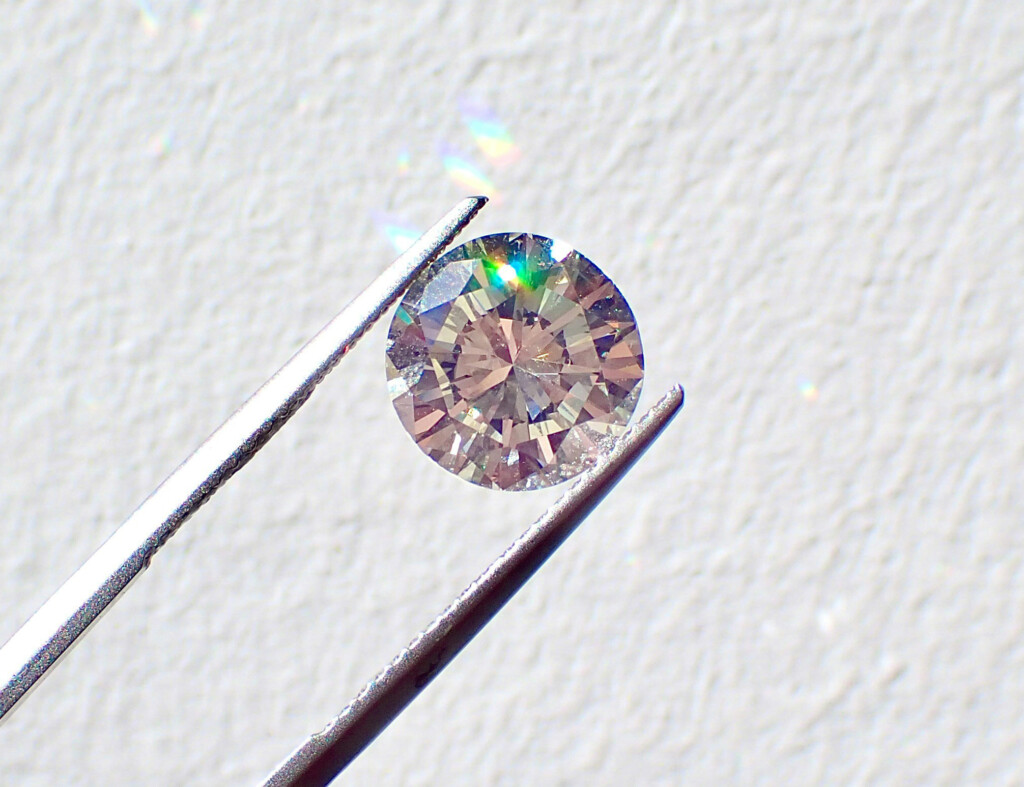
Photo credit: Tahila Doyle on Unsplash.com.
Restricting the use of the 4Cs as a descriptive tool
The Diamond Commission should continue to explore every way possible to restrict the use of the 4Cs so that they refer only to natural diamonds. This is because it is a tool intended to define the rarity and uniqueness of natural stones, where each one is different from the other.
We need to end the use of the 4Cs for grading synthetic diamonds, given that they are industrially produced. They should be subject to a specific quality-control nomenclature, which is suitable for man-made products. This approach has recently been adopted by the Gemological Institute of America (GIA), which announced last year that it would begin using descriptive terms more appropriate for describing the quality of synthetic diamonds, because “most fall into a very narrow range of color and clarity.”
Before the GIA created the 4Cs – the international standard for describing the quality of a diamonds – there was no common language. But they were not only created for grading, but also pointedly to provide the trade and the consumers an international language capable of communicating rarity.
The success of the 4Cs, therefore, is derived not only from their ability to describe the beauty of natural diamonds, but also because they communicate uncommonness in a language understood by both professionals and consumers alike.
When the 4Cs grading scale is used by the synthetic diamond industry to describe its production, the consumer is misled to believe that synthetic diamonds are rare like natural diamonds. This is clearly not the case, because the synthetic diamond manufacturer determines and controls the production parameters, with the objective of achieving predetermined quality characteristics.
Although natural and synthetic diamonds may share similar chemical composition and crystal structure, they derive their value from fundamentally different sources. Natural diamonds owe their value to the improbable circumstances by which nature randomly produced a crystal with a particular combination of characteristics over billions of years. Synthetic diamonds derive their value from human innovation, engineering precision, and manufacturing capability.


Photo credit: Erin Palos on Unsplash.com .
The confidence we project by the words we use
As we prepare to mark the Centenary of CIBJO — 100 years dedicated to protecting consumer confidence — I am more than convinced that only few industries depend upon language as profoundly as the diamond industry.
Every day, millions of consumers make purchasing decisions based not on their own gemmological knowledge, but on the confidence they have in the words used by jewellers, laboratories, educators, and international standards organisations. Terms such as natural, synthetic, treated, imitation, origin, clarity, and colour are not merely technical definitions. They are the vocabulary upon which transparency, consumer confidence and commercial integrity have been built for generations.
The mission of the Blue Books has never been to promote one product over another, nor to favour one commercial sector over another. Their purpose has always been to ensure that every product traded within the jewellery industry is described accurately, consistently and truthfully. Scientific precision and honest disclosure have remained the guiding principles of CIBJO’s standards since the organisation’s foundation.
This responsibility has never been more important than it is today. The rapid expansion of synthetic diamond production, remarkable advances in manufacturing technology and the emergence of new marketing strategies have impacted the diamond marketplace. Consumers are now presented with products that may look similar, but one is natural and the other artificial.
These developments do not represent a threat to the natural diamond industry or to the millions of consumers that for decades bought natural diamonds. They represent a challenge to standards and to those who deal with them.
Standards exist precisely because industries evolve. Therefore, the question before us is not whether synthetic diamonds should exist. They are legitimate products, manufactured through impressive technological innovation and serving legitimate consumer demand. Nor is the question whether manufacturers of synthetic diamonds should be entitled to market their products successfully. The question is considerably more fundamental. Do the words we use today continue to fulfil the purpose for which international nomenclature was originally created?


Photo credit: Abdulla Nasar on Pexels.com
Let’s look back to be able to look forward
Sixteen years have passed since CIBJO, together with other leading international organizations, accepted the terms “Laboratory-Grown” Diamond and “Laboratory-Created” Diamond, alongside the scientifically established term “Synthetic” Diamond.
At the time, the decision appeared both reasonable and constructive. Synthetic diamonds represented an emerging product category. Their manufacturers sought recognition within the broader jewellery industry, and many believed that harmonized terminology would encourage transparency while facilitating cooperation between all sectors of the trade, just like in the coloured stones industry. Those intentions were genuine. They reflected CIBJO’s longstanding commitment to inclusiveness, professional dialogue, and consumer protection.
With the benefit of such experience, I would say that it is now appropriate to ask whether the practical consequences of that decision have fulfilled those original objectives. Experience has demonstrated that terminology does far more than identify products. Terminology shapes perception, influences consumer understanding, affects commercial positioning and ultimately, it contributes to how value itself is perceived. Use of an inappropriate terminology may also have legal consequences.
As standards organizations, we have both the privilege and the responsibility to revisit our decisions whenever experience demonstrates that existing terminology may no longer serve consumers as effectively as originally intended. Such reassessment should never be interpreted as an admission of past error. On the contrary. It is evidence that standards continue to evolve responsibly alongside science, technology, and markets. Every international standard rest upon one fundamental principle. Scientific terminology exists to describe reality — not to promote commercial preference.
The purpose of nomenclature is not to make products appear more similar than they truly are. Its purpose is to enable consumers to understand why products differ from one another although they appear to be the same product. Whenever terminology begins to blur distinctions rather than clarify them, standards organizations have an obligation to reconsider whether that terminology continues to serve its original purpose.
This principle applies equally to every gemstone whether it’s a synthetic ruby, a synthetic sapphire, a synthetic emerald, a cultured pearl or any other artificial product. Every description communicates origin before appearance and diamonds should be no exception.
It’s time that we at CIBJO, for the benefit of enhancing consumer confidence in diamonds and all other precious stones, unite behind one semantic integrity principle, which is the principle that the terminology used to identify a gemstone should communicate its true scientific identity and origin, without borrowing language whose primary effect is to influence consumer perception or suggest commercial equivalence.
It is our duty to adopt such a principle, as far as the diamond nomenclature is concerned. Hopefully, it will extend beyond diamonds and provide guidance for future revisions across all Blue Books. I hope all of you will agree with me that this should be the prime principle that should govern nomenclature in a standards-based industry and I have a feeling that this is exactly what CIBJO needs to emphasize on its Centennial anniversary.
Our responsibility as the custodians of international standards is not to decide which products consumers should prefer. Our responsibility is to ensure that the language describing those products remains scientifically accurate, transparent, and worthy of the confidence that consumers place in it.
We have an opportunity that extends beyond revising terminology. We have an opportunity to reaffirm the principles upon which international standards are built which are – scientific accuracy, transparency, honest disclosure, and respect for consumer understanding.
Standards do not exist to influence consumer preference. They exist to ensure that whatever choice consumers make, they do so with complete and accurate information. That principle has guided CIBJO for 100 years and it should continue to guide us for the next 100. Now is the time to reflect on our past decisions, acknowledging where experience has shown that refinement is appropriate, and take decisive steps toward a more transparent and responsible future.
A new definition is born

By Jean-Pierre Chalain
Vice President
CIBJO Diamond Commission
It was before the 2025 CIBJO Congress that the Diamond Commission was approached by Mrs Jeanette Fiedler, a member of the German delegation in CIBJO, who expressed her uncomfortable feeling when reading the definition for the term “cut” in the Diamond Book, where it referred to “Shape, proportions and finish of a diamond.”
It took more than a year, a great many emails and PowerPoint presentations, not to mention open discussions among Diamond Commission officers before we were ready to admit that this definition should be amended, maybe because the definition was too old, or alternatively the officers were!
For 20 years at least, the definition had remained the same and nobody ever disputed it. What makes this time different?
In the light of numerous discussions, the current definition as it reads is more appropriate as the definition of the term “cut grade,” which is the result, for a diamond of a given shape (e.g. round) of the quality of its proportions and its finish (symmetry and polish).
Now, let’s have a look to the other side of the issue. What do we usually understand by the term “cut” and how should it be clearly defined to serve the best interest of our final consumers?
In the diamond trade, the cut of a brilliant is “round, brilliant”, the cut of a pear is “pear-shaped, brilliant” or “pear-shaped, modified brilliant,” regardless of proportions and finish. So yes, the current definition – “shape, proportions and finish of a diamond” should be changed. It should only refer to the shape and the cutting style of the diamond, period.
The new definition unanimously approved by members of Diamond Commission Steering Committee (DCSC) during its fourth and last meeting is “cut: a term addressing both the shape (5.62) and the cut style / cutting style (5.XX) of a polished diamond (e.g. “round, brilliant” or “octagonal, step cut.”)
Alongside with this new definition, all terms relating to the term “cut” were revisited. They are cut, shape, proportions, finish, symmetry, cut style or cutting style, cut grade, cutting, form, cut characteristics and grading.


Jeanette Fiedler, whose discomfort over the use of the word “cut” led to a change in the Diamond Blue Book.
In addition to changing the definition of the term “cut”, the DCSC introduces the definition of the term “cut style / cutting style” because this term appears in the new definition of “cut”. It adds a definition for the term “proportion” because it is listed in Annex B of the Diamond Blue Book, and finally the definition of the term “finish” is deleted because this term is not used in the DB.
All these changes are governed by four main rules:
- A definition shall appear only if the term is used in the Diamond Blue Book.
- The same definition cannot stand for two different terms.
- A term shall have one and only one definition.
- The Diamond Blue Book is drafted in the best interest of the final consumer.
It is important to note that for sake of the harmonisation of the CIBJO Blue Books, the new definition of “cut” was presented to, discussed with and then adopted as it is by the CIBJO Coloured Stone Steering Committee, meaning it will also be changed in the upcoming version of the CIBJO Gemstone Blue Book.
Finally, the Diamond Commission officers paid tribute to Jeanette, for her clairvoyance and insistence on us undertaking this important piece work.
The birth of the terms ‘Laboratory-grown‘ and ‘Laboratory-created‘ diamond
Last year, in the Diamond Commission Special Report there was a line that noted that “in 2010 a resolution was proposed by the Diamond Commission, and consequently approved by the CIBJO Board of Directors, which stated that ‘In the best interest of consumer protection and industry harmonisation, CIBJO accepts the terms “laboratory-grown” diamond, “laboratory-created” diamond and “synthetic” diamond to describe non-natural diamond.’”
Although this statement is correct, the terms “laboratory-grown diamond” and “laboratory-created diamond” were not born within CIBJO. Today, we want to inform you about the origin of these two controversial terms.
In December 2008, the Workshop 47 of the European Committee for Standardization – CEN adopted a business plan for drafting a project entitled “Consumer Confidence and Nomenclature in the Diamond Industry”. The kick-off meeting of this workshop had been held earlier, on September 10, 2008, in Brussels. Its agreed objectives clearly stated that “The aim of the workshop is to achieve an agreement on what constitutes clear nomenclature at point of sale for diamonds, synthetic diamonds, treated diamonds, treated synthetic diamonds and simulants.”
After a few meetings and numerous email exchanges, in March 2009, the text of the CEN Workshop Agreement-CWA was adopted and for the first time it introduced the terms “laboratory-grown diamond” and “laboratory-created diamond,” as being synonymous to “synthetic diamond.” It is noticeable that among the 48 votes that were cast, 11 experts were firmly opposed to not only using the term “synthetic diamond”.
The CWA document was then published in May 2009 with the number CWA 15965, and it contained in an annex the comments of experts who voted against the draft. It is also important to note that this document reflects only an “agreement” and was not at this time a European standard.
CIBJO adopted these two new terms in 2010. But, already in July 2008, the Secretariat of ISO/TC 174 (the International Organisation for Standardisation’s Technical Commission for Jewellery) was informing its members of the CEN enquiry, which ended with the creation of the CEN/TC 410 WS47 and finally with the above mentioned “agreement”.
In February 2013, CEN/TC 410 sent to its members a “dispatch notice” for discussing the CWA 15965 document to form an ISO document under the umbrella of its Technical Committee TC 174. The document was thus discussed by members of ISO/TC 174 under the name ISO/DIS 18323:2013 – Consumer confidence in the diamond industry.
Two years later, the document became both an ISO standard published under the name of ISO/IS 18323:2015 and a CEN standard published under the name EN ISO 18323:2015. Conforming to the ISO systematic review process, this ISO document was reconfirmed by a vote in 2020 and in 2025.
Today, conforming with CIBJO usages, the document ISO/IS 18323 is a normative reference of the Diamond Blue Book. And as announced last year the Diamond Commission Steering Committee will propose to the Diamond Commission at the CIBJO Vicenza Congress to modify the Diamond Book so that only the term ‘synthetic’ shall be used to describe a non-natural diamond.
– Jean-Pierre Chalain
A better way to define or clarify what are the 4Cs

By Thomas Lind
Vice President
CIBJO Sector A
Unlike other gemstone sectors, confidence in the rarity of natural diamonds—and consequently in their long-term value—is fundamentally linked to the internationally recognized concept of the 4Cs, which finds its practical expression in diamond grading.
The Diamond Commission Steering Committee, therefore, considered whether CIBJO, in its role as a bridge between the industry and consumers, could further strengthen communication and education regarding the principles of diamond grading.
In this context, it was also noted that the current framework of normative references may be one aspect to be taken into account when considering how such information can best be communicated.
The Committee agreed that this topic merits further discussion as a possible future project, separate from the Diamond Blue Diamond Book.
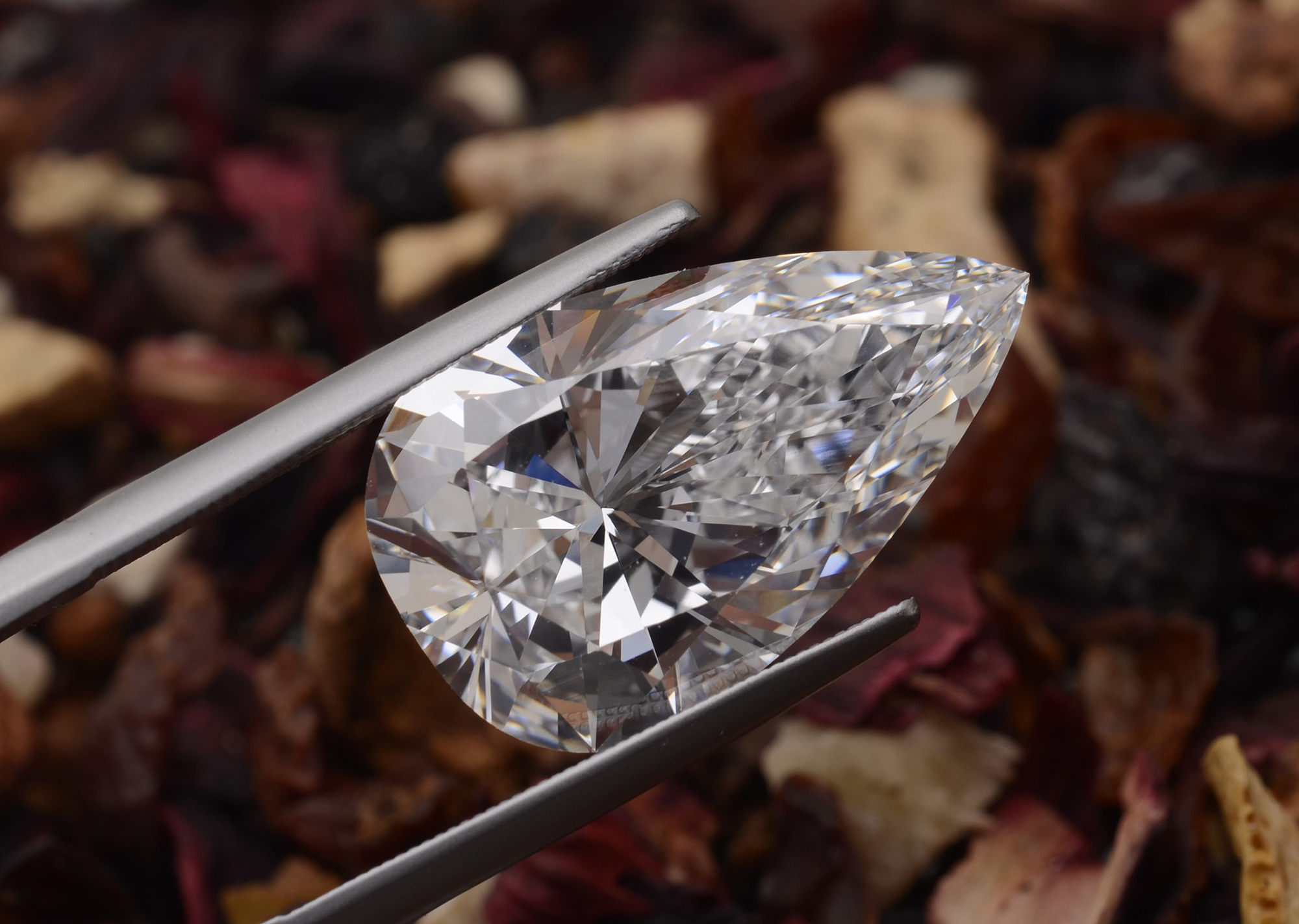
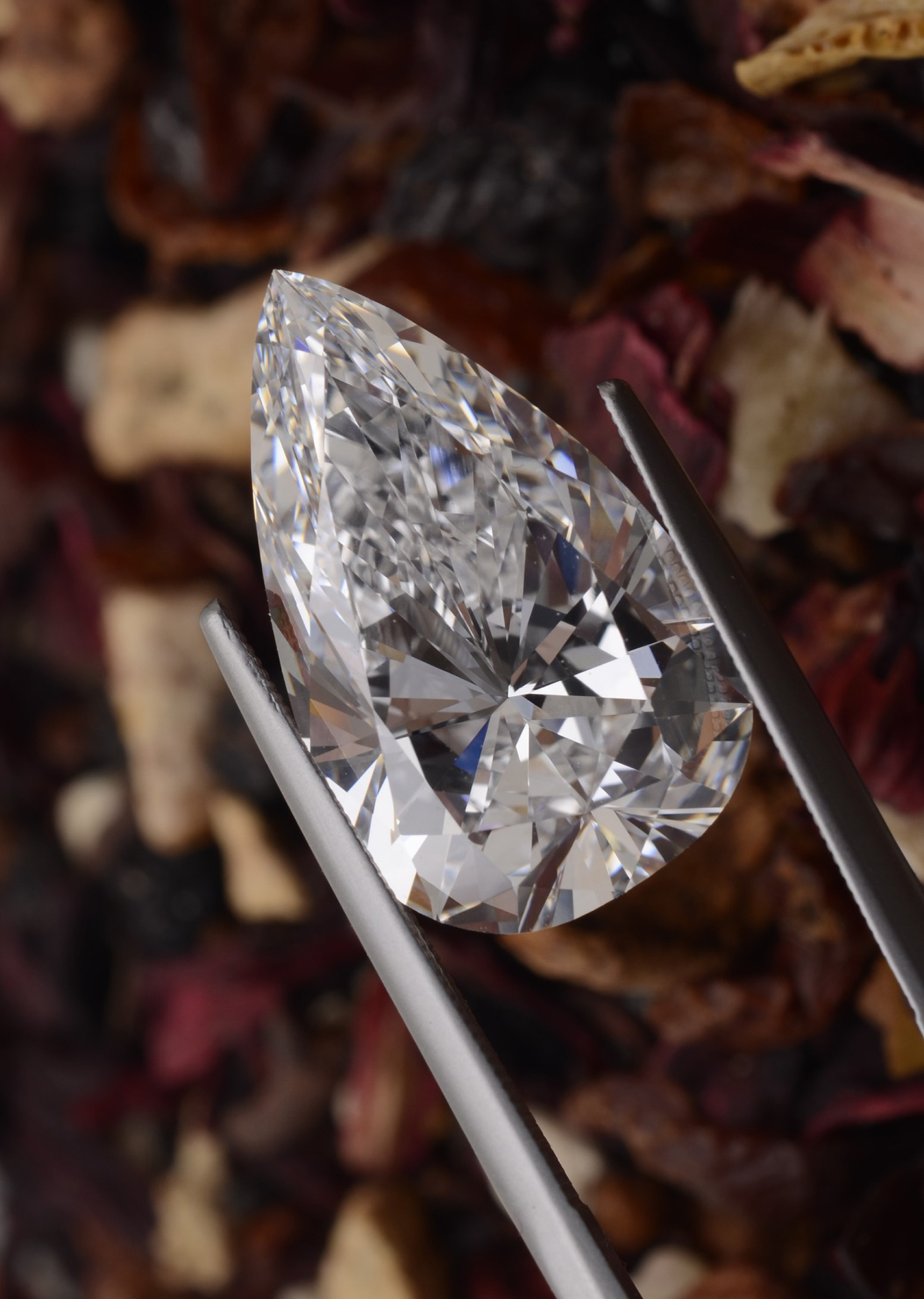
Photo credit: Swiss Gemmological Institute SSEF
Mining nations forging a new regulatory consensus
By Peter Karakchiev
Head of International Relations
ALROSA
2026 has seen a decisive and long-overdue shift towards protecting the interests of the diamond industry – diamond-producing nations are actively shaping a new regulatory landscape to protect the natural diamond’s unique value proposition and ensure full disclosure.
For years, the industry has grappled with the consequences of ambiguous terminology that allowed synthetic stones to be positioned as equivalents to natural diamonds, being a parasite on generic marketing efforts, eroding consumer trust and destabilizing the socioeconomic fabric of producing countries. Today, however, mining nations are leading a coordinated global response, translating concern into concrete action.
At the heart of this movement is the African Diamond Producers Association (ADPA), whose member states account for over 70 percent of global diamond production.
Following the ADPA Council of Ministers meeting in Freetown, Sierra Leone on May 20, 2026, the association formally adopted a unified position built on three core pillars: restricting the 4Cs grading system exclusively to natural diamonds, mandating carat weight as a measure exclusive to natural stones (with synthetics measured in grams), and establishing “synthetic” as the sole global descriptor for synthetic products, prohibiting misleading euphemisms like “laboratory-grown.”
This common position reflects a growing consensus that clear market differentiation and disclosure is no longer optional – it is essential for industry survival. The underlying reasoning is compelling, and that is that grading synthetics with the 4Cs is fundamentally flawed, as natural diamonds derive their characteristics from unique geological processes over billions of years, while synthetic stones are industrially manufactured in factories (not labs) under tightly controlled conditions, with their features predetermined and mass-produced.

Officials of the African Diamond Producers Association (ADPA), whose member states today account for more 70 percent of global diamond production, and who have taken a principled stand against the use of the 4Cs for evaluating synthetic diamonds.
This regulatory momentum extends beyond Africa. Russia, the world’s largest diamond producer and one of the industry’s most responsible participants, has taken a decisive step forward. In May 2026, the Russian Government adopted Resolution No. 657, introducing amendments to the Rules for the Sale of Goods to safeguard consumers from deceptive practices. Effective September 1, 2026, the legislation establishes clear requirements: when a natural mineral name is used to describe a synthetic inlay, the label must include the word “synthetic;” the use of “diamond” (meaning a polished diamond in Russian) or its derivatives for synthetics is prohibited; quality and colour characteristics typical of natural diamonds cannot be indicated for synthetic stones; and their weight may only be expressed in grams.
Factually this regulation follows the already well-established precedents set in the regulatory frameworks of Belgium and France. Additionally, words such as “precious,” “natural,” “mined,” or “eco-friendly” are forbidden in connection with synthetics – a direct counter to the unsubstantiated marketing narratives that have misled consumers and positioned synthetics as the more ethical choice without substantiation.
These national initiatives are being reinforced at the multilateral level. Within the Kimberley Process, South Africa has submitted a draft Technical Guideline on Recommended Practices for the Distinct Differentiation of Natural and Synthetic Diamonds. In the same vein, the diamond-producing countries fully endorse the ongoing revision of the CIBJO Diamond Blue Book.
The convergence of these efforts demonstrates a remarkable alignment among mining nations on the principles required to restore clarity. As the diamond industry navigates this period of transition, the active role of producing nations in shaping best practices offers a clear path forward – one built on transparency, fair competition and consumer protection, and the categorical distinction between a finite geological treasure and a manufactured commodity.
It is now incumbent upon all other participants across the diamond and jewellery value chain to actively support these efforts in practice – not merely through words, but through concrete legislative, commercial and standard-setting actions that reinforce the clear differentiation between natural diamonds and synthetics, thereby safeguarding consumer trust in the sector and the long-term sustainability of the industry as a whole.
Mazal

By Alan Cohen
Member
CIBJO Diamond Commission
here is a word that sits quietly at the heart of the diamond trade.
Mazal.
In Hebrew it means luck or fortune. In the diamond world it means something slightly different. It is the word that closes a deal.
For generations, two diamantaires could agree on a transaction, shake hands, say “mazal u’bracha,” meaning luck and a blessing, or simply just “mazal” and that was enough. The deal was done.
No contract. No paperwork. No lawyers.
Just a handshake.
And yet those deals were as binding as any written agreement.
To people outside the industry this sometimes sounds romantic, almost mythical, a relic of another era when business was done on trust alone. But the reality is more interesting than that. The diamond trade did not operate without structure. It operated with a different kind of structure.
Mazal was only the visible part.
Behind it stood the institutions of the trade itself.
Of course, the large mining companies have always operated differently. Their sales are conducted under formal contracts, sight agreements, supply agreements, tender rules and corporate legal frameworks.
But once diamonds enter the trading pipeline, the rhythm of the market changes.
From dealer to dealer, cutter to broker, broker to wholesaler, the day-to-day movement of goods historically took place through far simpler agreements. Parcels could pass through several hands in a single day. Writing contracts for every transaction would have slowed the entire system down.
Instead, the industry relied on something older and faster.
A trader might buy a parcel worth hundreds of thousands of dollars with nothing more than a handshake and the word mazal. Payment might follow days later, sometimes weeks later, depending on the relationship.
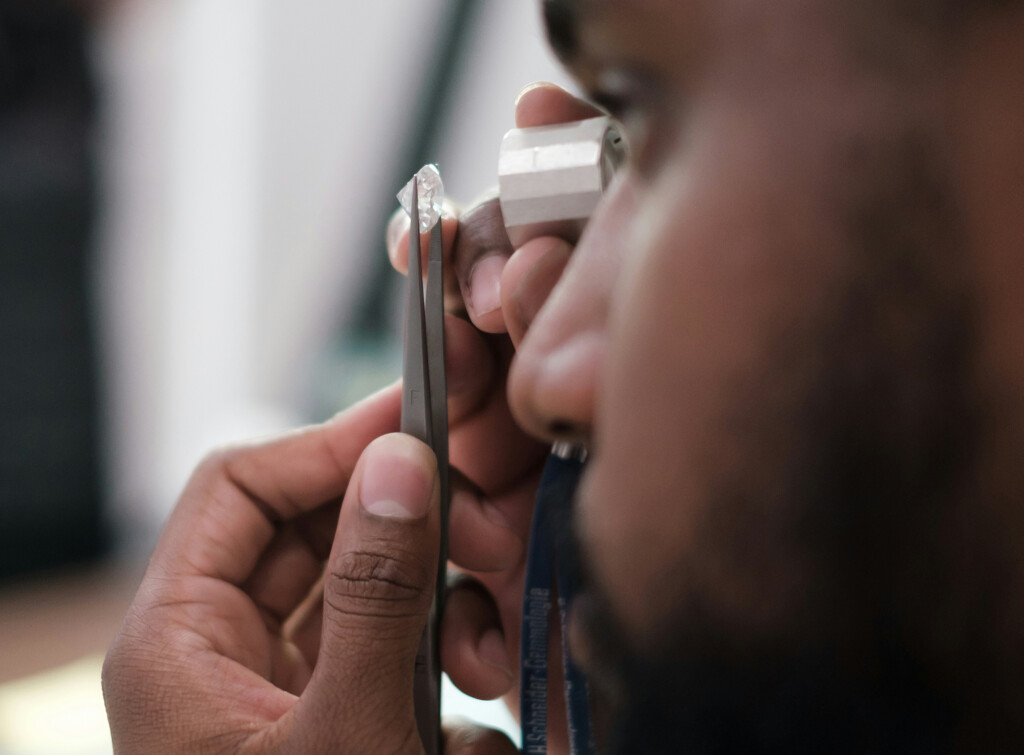
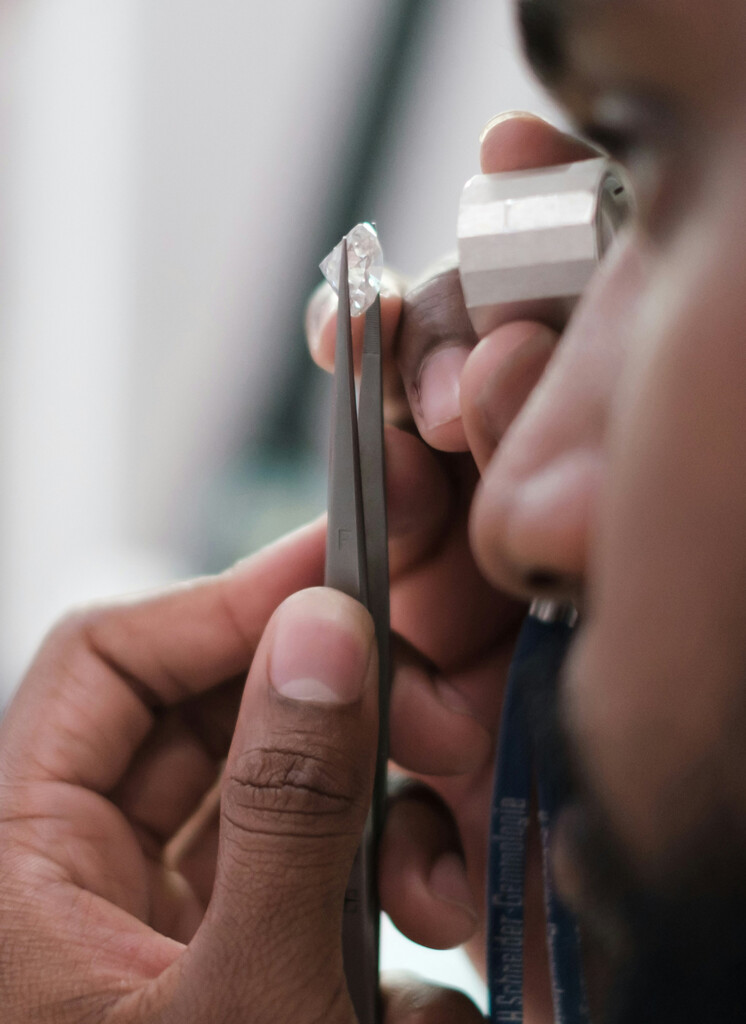
Photo credit: Dillon Wanner on Unsplash.com.
But mazal was never blind trust. It worked because the trade built its own system of enforcement.
That system was bourse arbitration.
From Antwerp to Tel Aviv, from New York to London, Mumbai and Dubai, the diamond exchanges developed their own internal mechanisms for resolving disputes. If a disagreement arose at any time, even when a deal had been concluded members did not automatically run to the civil courts to sort problems. They brought the matter before an arbitration panel composed of fellow diamantaires.
These panels were not courts in the conventional legal sense. They operated under what lawyers describe as non-substantive arbitration.
In simple terms, that meant they were not required to apply the full technical machinery of national commercial law. Instead, they decided disputes according to trade custom, fairness and the accepted practices of the diamond industry.
And one of those practices was mazal.
If two traders shook hands and agreed a deal, the arbitration panel did not begin by asking whether there was a written contract. The question was whether the parties had reached an understanding in the way diamantaires traditionally conducted business.
Did the handshake take place? Was the price agreed?
Was the parcel as described? Were payment terms discussed?
If the answer was yes, the deal was generally treated as binding.
The strength of the system came not from legal theory but from community enforcement. If a trader refused to honour an arbitration decision, the bourse could suspend or expel them.
In practical terms that meant losing the ability to trade. So, the real contract was never just the handshake.
The real contract was your reputation, backed by the authority of the trade itself.
Photo credit: Sabrianna on Unsplash.com.
The culture of mazal grew out of the great European diamond centres of the late 19th and early 20th centuries, particularly in Amsterdam and Antwerp.
These were tightly knit trading communities where diamonds moved quickly between dealers, cutters, brokers and exporters. Written contracts were often impractical.
A handshake was faster.
But speed alone would never have been enough. What made the system durable was the presence of the diamond bourses, which acted as marketplace, regulator and court of arbitration.
Mazal was the language of agreement.
The bourse stood behind it.
For much of its history the diamond trade rested largely in Jewish hands.
This was not accident, and it was not preference. It was the result of exclusion.
Across much of medieval Europe, from around the 12th and 13th centuries, Jews were barred from the Christian craft guilds, shut out of land ownership, and closed off from many established professions. What remained open were the trades others controlled less tightly. Lending. And dealing in small, portable, high-value goods.
Diamonds fitted that life exactly.
A community living under the constant possibility of expulsion, from England in 1290, from Spain in 1492, from Portugal in 1497, learned to hold its wealth in a form it could carry. A diamond was value you could fold into a coat and take with you.
When diamond cutting took root in Amsterdam and Antwerp in the late 16th and 17th centuries, it became one of the few skilled trades genuinely open to Jews, precisely because it was new and lay outside the old guild monopolies. Sephardic (Jews of Spanish descent) families fleeing the Iberian expulsions helped to build it.
The trade became Jewish not by design but by necessity, and it carried its own customs with it.
In those days there were no bourses to arbitrate a dispute.
There was the rabbi.
A broken mazal could be brought before the local rabbi, whose word carried the authority of the community and, in practical terms, the force of law. He did not begin by asking whether there was a contract. He asked whether a man had dealt honestly, and whether he had kept his word.
To be found wanting was to lose something no court could return. Your standing. Your name.
The bourse arbitration panel, when it came, was simply the secular heir to the rabbi’s judgement. The same principle. The same authority. The same reliance on reputation rather than paperwork.
There was also a practical reason why disputes stayed inside the trade.
Courts were not well suited to diamond cases.
Judges rarely understood the technicalities of assortments, qualities, weight tolerances or trade terminology. Even something as simple as whether a parcel matched its description could involve specialised knowledge that only experienced diamantaires possessed.
Bourse arbitration panels, by contrast, were made up of people who handled diamonds every day. They understood how deals were actually made, and they understood the significance of a handshake accompanied by the word mazal.
While the outside world sometimes imagines the diamond trade as informal or chaotic, the reality was quite the opposite. It functioned within a highly structured community system where reputation, arbitration and membership rules created an efficient and remarkably resilient market.
Mazal closed the deal.
The bourse made sure the deal stood. Many bourses historically did not allow companies to become members precisely because companies have limited liability. Membership was personal. A diamantaire stood behind his trades with his own name and reputation. If something went wrong, he could not hide behind a corporate structure.
When arbitration decisions were challenged and taken to court, they were very rarely if ever overturned. Judges generally recognised that the arbitration panels were composed of experienced diamantaires who understood the customs and practices of the trade, and they were reluctant to second-guess their decisions.
Even in modern times the authority of arbitration in the diamond trade remains remarkably strong. In one of the largest disputes in recent industry history, involving claims exceeding one hundred million dollars, the losing party attempted to overturn the arbitration award in the courts of New York. The challenge was rejected and the court upheld the ruling, reaffirming the long-standing principle that arbitration decisions, particularly those made by panels with deep industry expertise, are given significant weight by the court.
Mazal still closes the deal.

Photo credit: The Glorious Studio on Pexels.com.
But the arbitration structures behind it continue to adapt to the modern industry.
Today the industry is evolving. Compliance systems, banking regulation, traceability platforms and digital documentation are becoming part of daily life.
In many ways that evolution is necessary.
But it is worth remembering that long before blockchain, long before digital ledgers and compliance frameworks, the diamond trade had already developed its own mechanism for trust.
A handshake.
A reputation.
And a quiet wish for good fortune.
Mazal.
From the rabbi’s ruling to the bourse arbitration award, the trade has always kept one authority above all others. The authority to say what is true. The rabbi judged whether a man had described his goods honestly. The bourse asks whether the parcel is as described. Both were guarding the same thing, that a word in the diamond trade means what the trade says it means.
That brings us into the modern era, and the creation of synthetic diamonds. The name for synthetic diamonds should never be a marketing decision. The trade already has an honest word for it, agreed through its own standards, and that word is “synthetic.” To reach instead for something softer blurs what a stone is, and that fails the oldest test the trade ever set, the one the rabbi set long before there was a bourse to inherit it.
Mazal was never blind trust. It rested on honest description. It still should.