Gold jewellery’s share of overall bullion demand is falling,
expert tell CIBJO congress
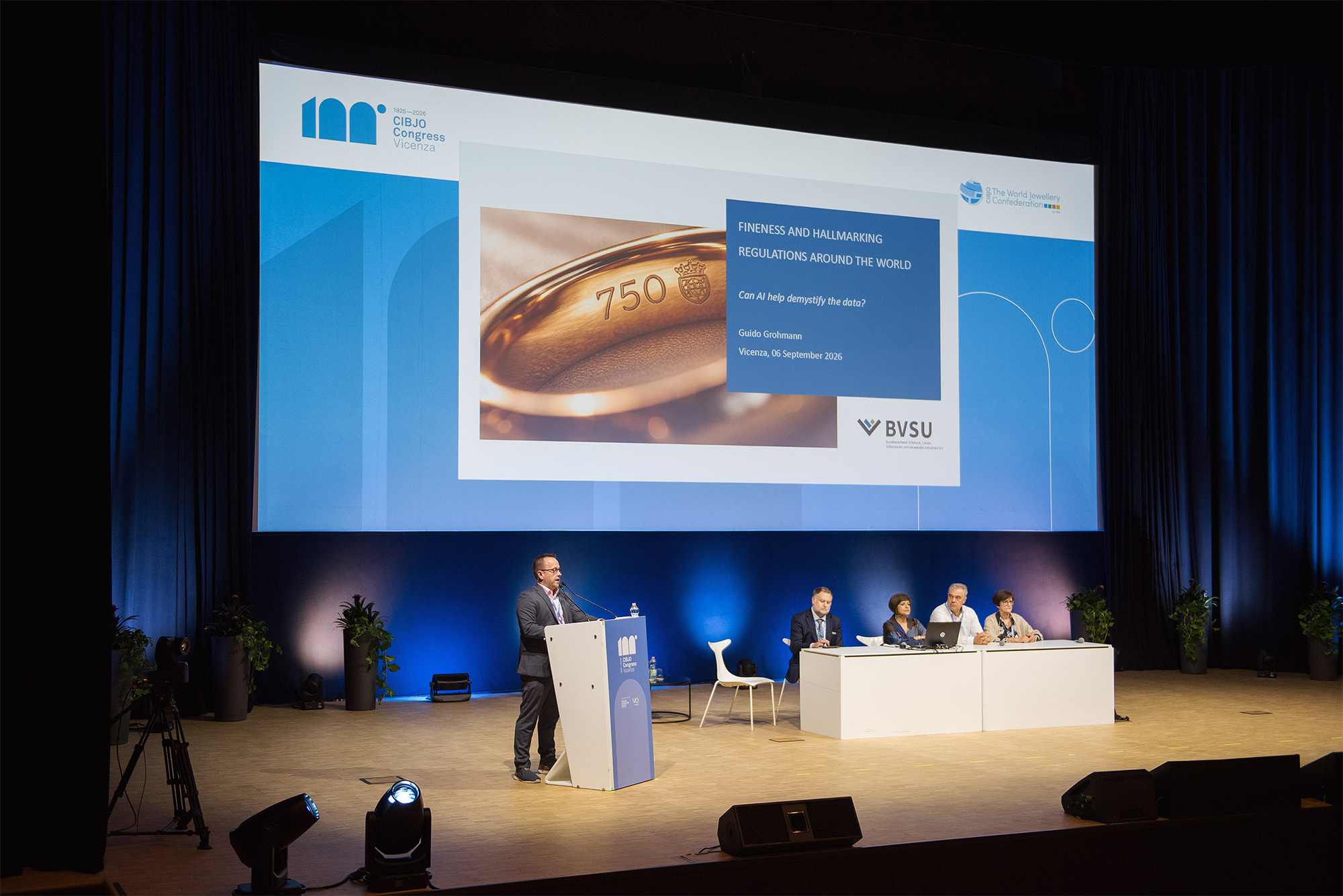
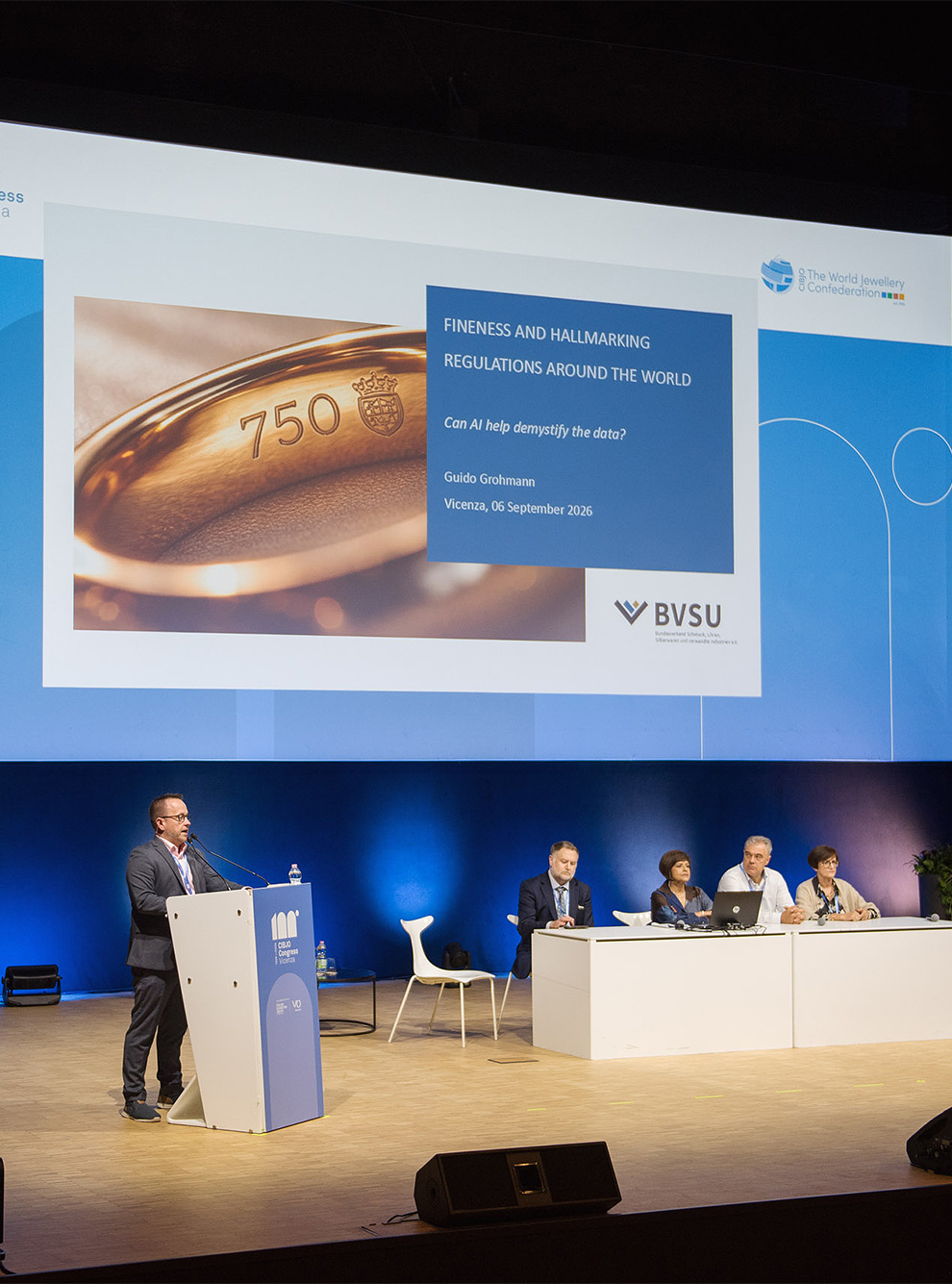
The Precious Metals Commision is session at the 2026 CIBJO Congress on September 6, 2026 in Vicenza, Italy.
SEPTEMBER 6, 2025
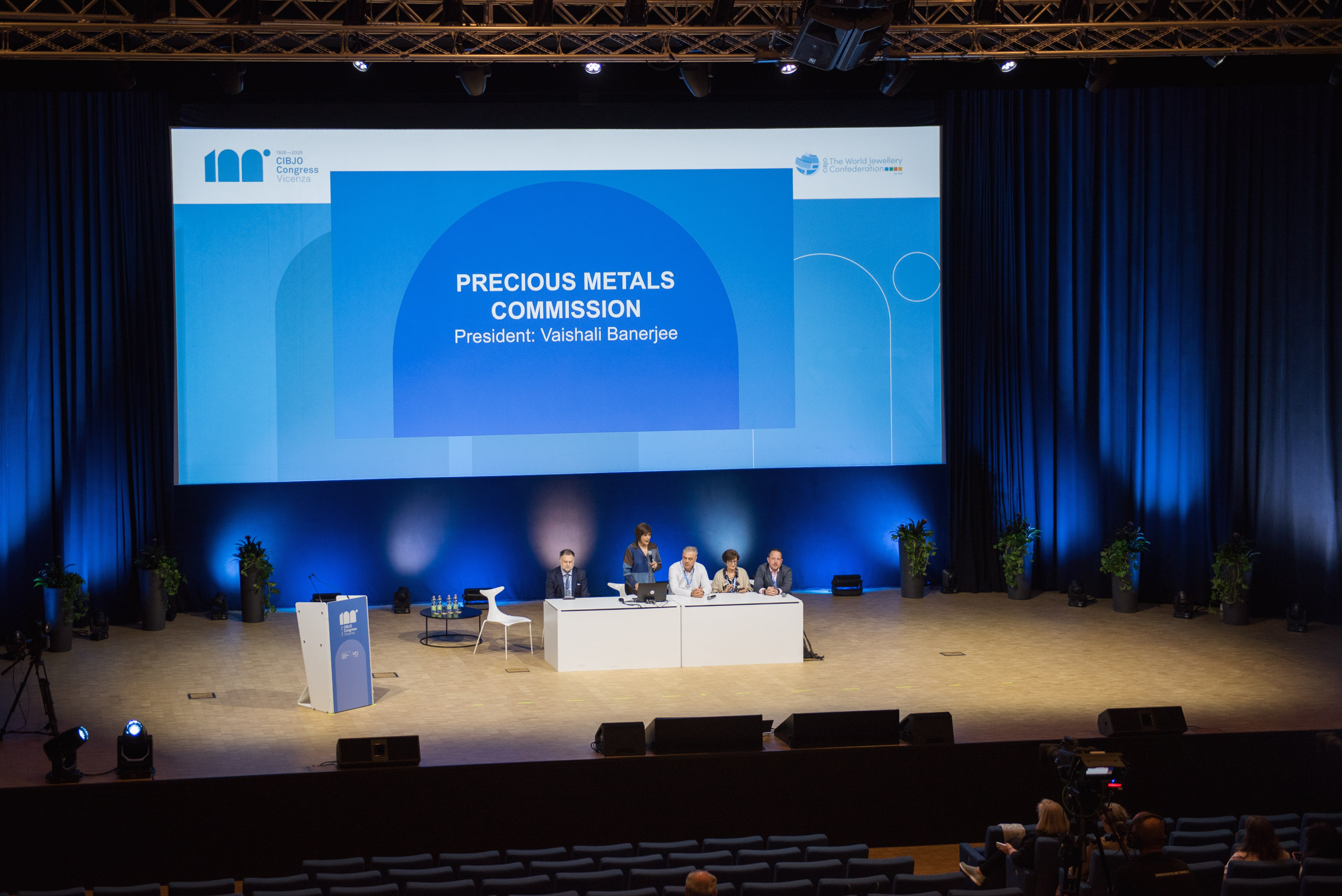
Gold jewellery’s share of overall gold demand is declining, Matthew Piggott, director of gold and silver at Metals Focus, told the CIBJO Congress. Speaking during the session of the CIBJO Precious Metals Commission, he said gold jewellery’s share of total gold consumption had fallen towards levels last seen during the pandemic.
The congress session was chaired by the Precious Metals Comission President, Vaishali Banerjee.
The volume of gold consumed by the jewellery sector had declined because of surging bullion prices, Mr Piggott said.
Platinum has been more resilient in terms of jewellery’s share of demand, he said.
Platinum has taken some market share from gold in jewellery, partly because of the substitution of platinum for white gold, he added.
Mr Piggott referred to an increase in the availability of 9-carat gold jewellery in India, as surging bullion prices had led to the production of lower-purity gold jewellery.
Addressing what’s coming for precious metals, Mr Piggot said that the risk that the U.S. Federal Reserve may raise interest rates in September 2026 has weighed on bullion prices.
However, concerns about the huge U.S. public debt, as well as uncertainty over the outlook for the U.S.-Iran war, may support further gains in gold prices in the coming months.
Metals Focus expects gold prices to rise above $5,000 per ounce by the end of 2026, and possibly climb higher in 2027.
The consultancy expects silver prices to exceed $70 per ounce in the fourth quarter of 2026.
Such forecasts indicate that demand for gold and silver jewellery could fall in volume terms, Mr. Piggott said.
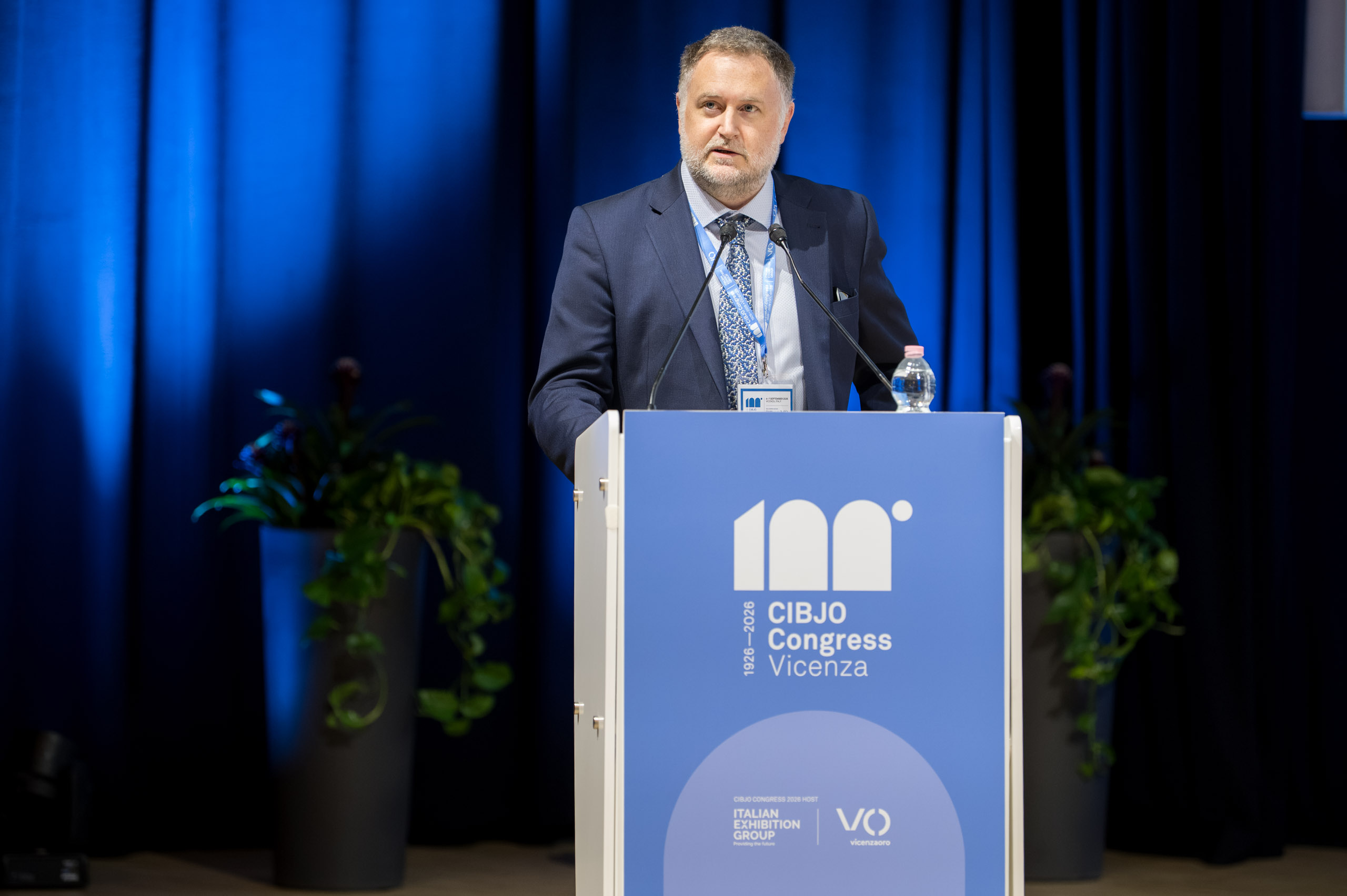
The CIBJO Precious Metals Commission heard calls for a reference document providing an overview of legally required hallmarking regulations in countries around the world.
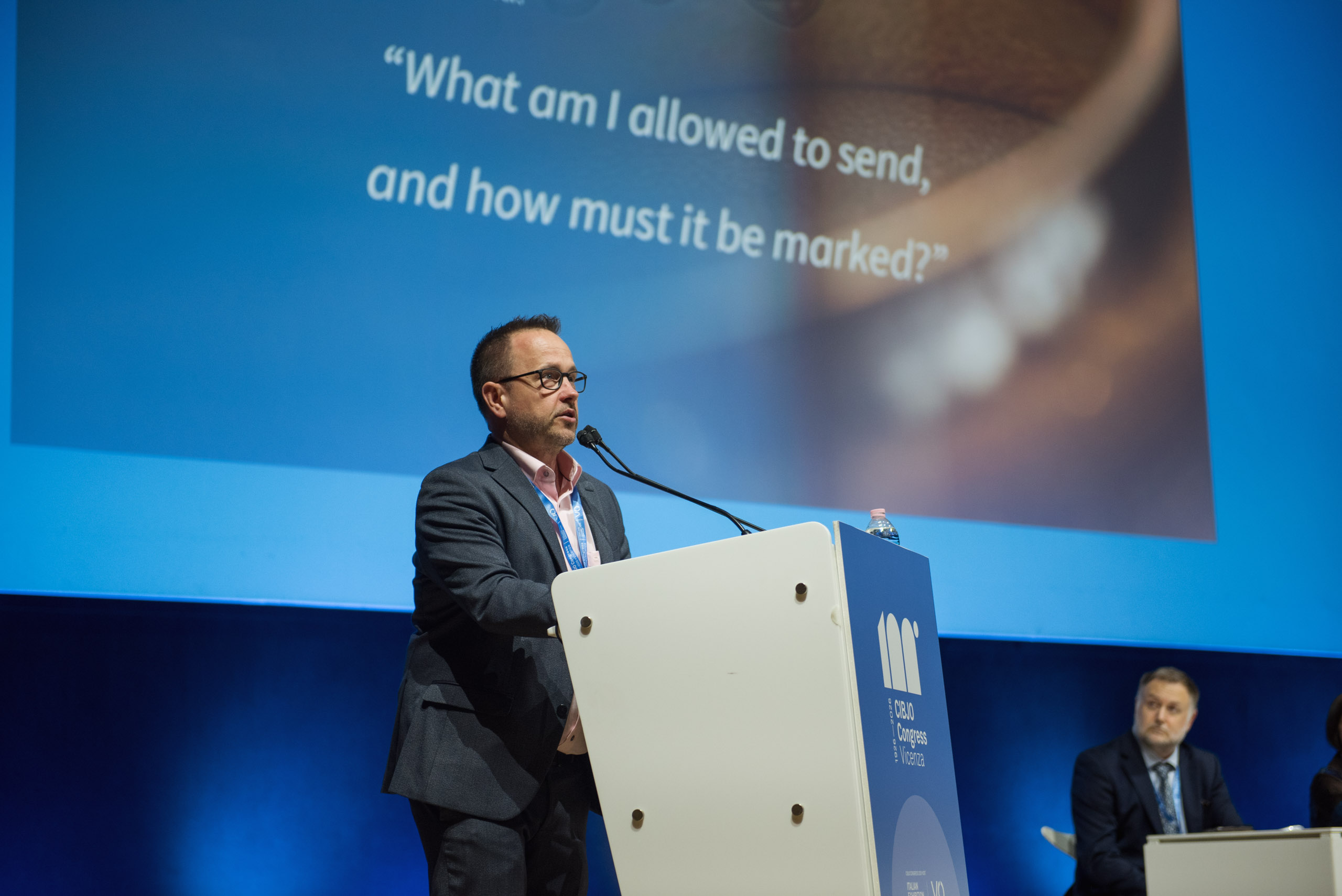
For a manufacturer, shipping a product without knowing the hallmarking regulations in a particular market can create an invisible barrier to trade, Guido Grohmann, Managing Director, Bundesverband Schmuck, Uhren, Silberwaren und Verwandte Industrien (BVSU), the German jewellery association.
The BVSU attempted to compile data for such a reference document using artificial intelligence, but found that the research was fast and well structured, yet “in parts very convincingly wrong,” Mr Grohmann stated.
“First, cross-check against different AI-based models,” he noted, adding “second, use a carefully framed question and check sources carefully,” he added.
“AI has reduced the cost of a first draft to almost nothing, but has not reduced the cost of validating findings,” he said.
A reference work that is wrong about one country does more damage than having no reference work at all, Mr Grohmann said.