SPECIAL REPORT

ETHICS

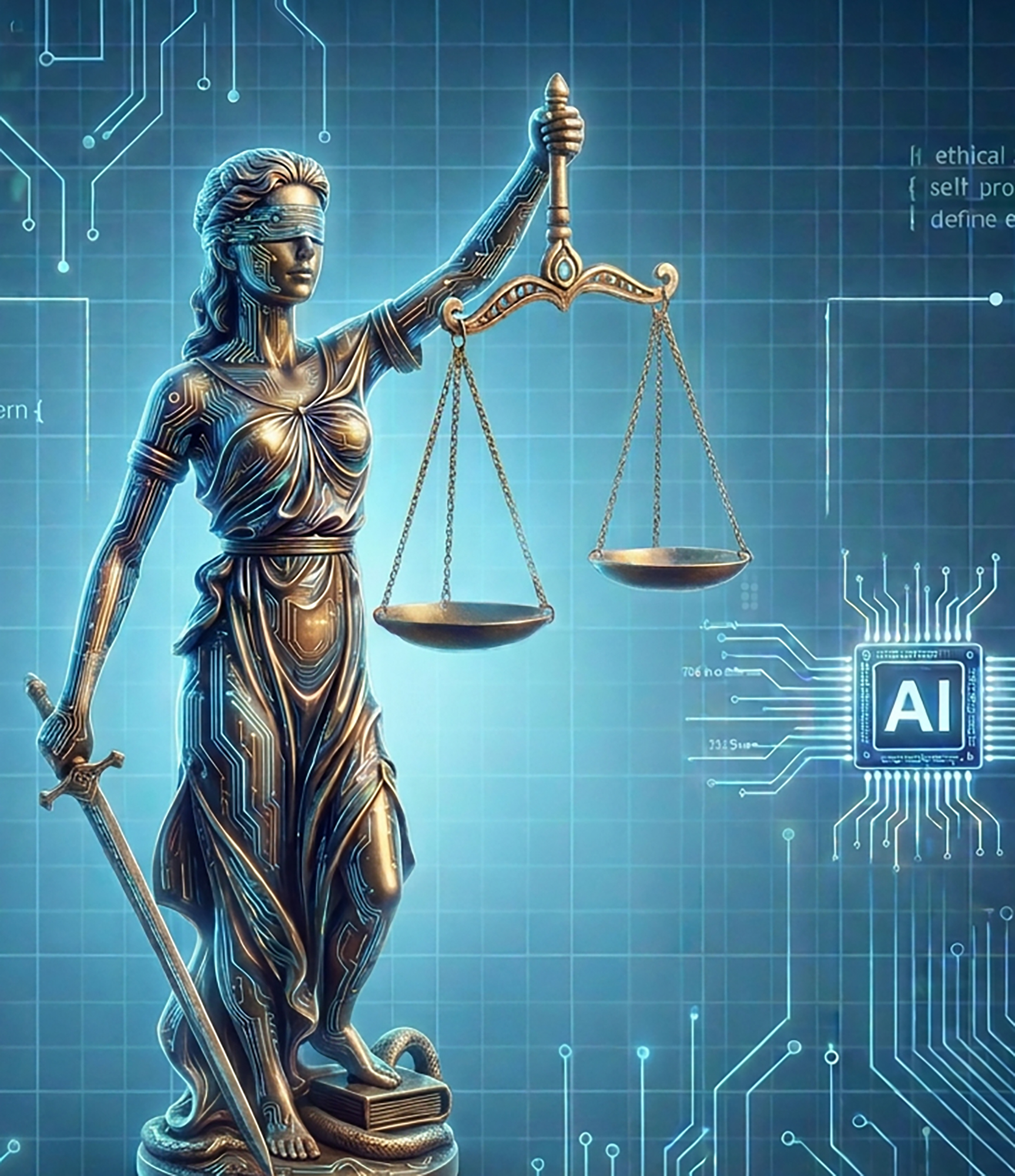
Photo entirely created using Generative Artificial Intelligence.

The human implications of intellectual property
and Generative Artificial Intelligence

By Sara Yood
President
Ethics Commission


CIBJO’s Ethics Commission broadly addresses integrity, transparency and consumer trust. This report will look at intellectual property rights and how they may be impacted by generative artificial intelligence (GenAI).

For the sake of clarification, Artificial Intelligence (AI) is the broad science of making machines smart, while Generative AI (GenAI) is a specific subset of AI that focuses on creating new content like code, text, images and actual design blueprints.

I would note at the outset that, because IP laws differ significantly among jurisdictions, we cannot possibly cover every nuance. Therefore, the report will focus on ethical and policy-oriented recommendations.

Over the past year, businesses have increasingly turned to GenAI across the value chain to enhance and accelerate business. These tools certainly can expand human creativity and increase output, but they have the capacity to create a central tension, because GenAI can also appropriate, imitate or obscure creativity.

The ethical use of GenAI must not undermine the intellectual property rights of designers, artisans, photographers, brands, and other human creators, and this requires more than just technical legal compliance. Businesses must continue to value transparency, respect for authorship, meaningful human oversight, and clear accountability.

GenAI is a tool that should reinforce human trust rather than replace it. When human creativity remains at the centre, the jewellery industry can continue to utilise technology to evolve while maintaining trust.

Photo entirely created using Generative Artificial Intelligence.

GenAI’s role in the jewellery lifecycle continues to evolve

GenAI is already being used to enhance processes in the jewellery industry, which is not surprising considering that market valuation continues to rise.[2] Technology companies also continue to prioritize native GenAI models in their overarching software, which can increase overall adaptation.

Moving far past the early simple generative text models, businesses are using GenAI for:

  • Concept development and jewellery design
  • CAD models, rendering, and customisation
  • Product photography
  • Virtual modelling and try-on experiences
  • Advertising copy, social media, and campaign imagery
  • Trend forecasting
  • Manufacturing and production optimisation
  • Authentication, infringement detection and anti-counterfeiting

There is a fundamental difference between AI-assisted work, in which a human remains the creative decision-maker, and AI-generated work, in which the system determines much of the expressive result.

This distinction is increasingly important to questions of authorship and ownership. The United States Copyright Office, for example, recognises protection for human-created elements, while concluding that AI prompts alone generally do not provide sufficient human control over an output and are therefore not entitled to copyright protection.[3]

Photo entirely created using Generative Artificial Intelligence.

IP frameworks still matter, but questions remain

Despite the GenAI boom, intellectual property laws are still in place and govern how intellectual output is valued and protected.

The three major areas of intellectual property that apply to the jewellery industry – copyright, patent and trademarks – must still be respected. In some cases, there are aspects of creativity, such as traditional cultural expressions – including motifs, techniques, patterns, and cultural heritage – that may not be fully protected by conventional intellectual property law. Nonetheless, they still deserve ethical respect.

One of the issues with AI is that, currently, it is essentially unregulated, meaning that there is little oversight as to how companies are building algorithms, where they are sourcing information, and how and even if they are preventing their algorithms from being trained on copyrighted material.

There are significant questions about whether the law can keep pace with innovation. The World Intellectual Property Organization (WIPO) has identified transparency, consent, attribution, compensation, and scalable rights-management systems as central international concerns when it comes to GenAI.[4]

Photo entirely created using Generative Artificial Intelligence.

The possible pitfalls of using GenAI when designing jewellery

Generative AI models are trained using enormous quantities of data, potentially including protected designs, photographs and text. Many creators have not consented to, been credited for, or been compensated for these uses.

But the GenAI companies argue that they are entitled to use this material because it is similar to the way humans learn. They say it falls under fair use concepts, and that the programming allows for unprotectable patterns to be extracted rather than storing illegal copies of protected information.

But publicly accessible content is not necessarily free to copy, reuse or place into an AI system. Moreover, in many jurisdictions, rights-holders are required by law to aggressively protect their rights in order to maintain them.

There is significant risk in uploading protected content into GenAI, and users should be sure to purchase licenses rather than use free versions of the models, so that their content is kept in a closed universe and is not used to train the models themselves.

Since GenAI cannot be an author for the purposes of copyright, there is also a real risk to using it for jewellery design. Any design made solely using GenAI cannot qualify for copyright protection, leaving it available for anyone to use.

GenAI can also be intentionally used to design items closely “inspired by” other designers, and there’s simply not enough case law yet to truly understand where being inspired by other work crosses the line into infringement. GenAI outputs that reproduce existing jewellery designs are clearly infringing, but those that merely resemble existing designs may slide by with unethical actors.

Prompts requesting a design “in the style of” a named designer or specific brand should not be used. Not only is this infringement, but it also risks the broader harm of design homogenisation and displacement of independent designers and artisans.

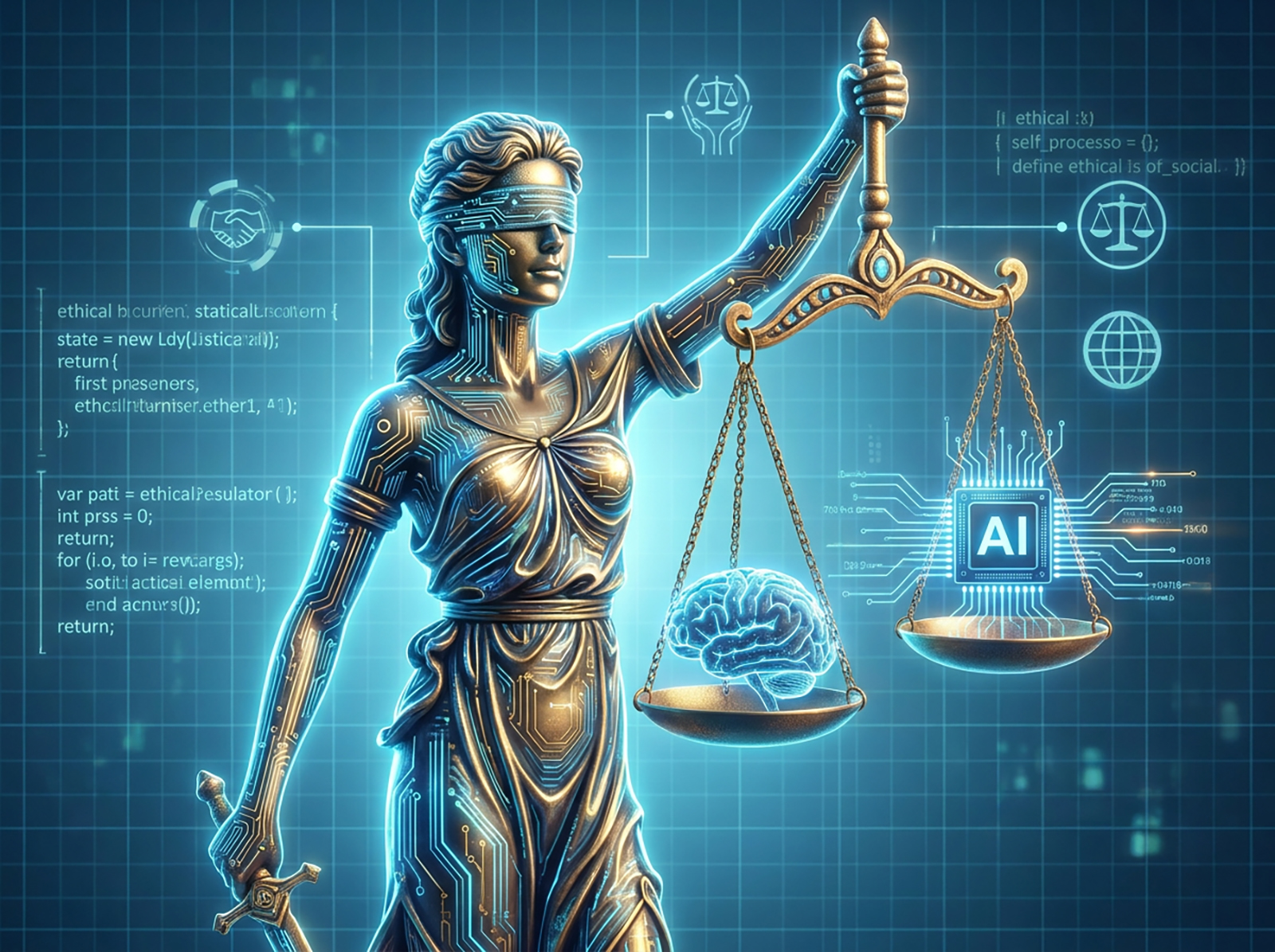
Photo entirely created using Generative Artificial Intelligence.

Considering an ethical and responsible GenAI framework

How should we handle creativity and GenAI when they meet in a business?

There has over the past 40 years developed an implicit understanding that new technology must be adopted to stay ahead of the curve, ever increasing the speed of production and the economies of scale. But there may be a human cost and employers have a responsibility to employees to ensure they have guidance in adopting new technologies.

When considering how to implement an ethical framework for GenAI use, businesses should consider drafting a Workplace AI Policy that addresses the following areas:

  • Human accountability: Someone in the business should be responsible for every commercial use of AI, and more specifically GenAI.
  • Respect for creators: Businesses should prohibit unauthorised copying and deliberate imitation.
  • Transparency: Material GenAI use should be disclosed when it can affect authorship, authenticity, or consumer expectations.
  • Traceability: Businesses should maintain records of tools, prompts, and source material.
  • Environmental impact[5]: GenAI use should be conscious of the degree to which it draws on energy and water resources.
  • Cultural respect: Traditional motifs and culturally significant designs should not be reduced to uncredited training material or stylistic prompts.
  • Consumer protection: GenAI output should not misrepresent a product’s design, materials, craftsmanship, or provenance, and all standard product disclosures should be made
  • Human creativity and dignity: GenAI should support human capability rather than erase human contribution

These principles align with UNESCO’s emphasis on human responsibility, transparency and trustworthiness throughout the AI lifecycle.[6] A written policy addressing the above priorities should identify approved programmes for employees and prohibit uploading third-party materials without authorisation.

Having a governance framework for acceptable AI use will also prepare the business for continued evaluation of new GenAI systems as they come to market.

But the jewellery industry should welcome the technological innovation of GenAI without losing sight of the fact that creativity is the stable foundation on which it rests. Creativity is not an unlimited raw material; it must be both nurtured and valued to encourage each subsequent generation of participants in the jewellery industry.

GenAI’s legitimacy within the jewellery sector will depend on whether it enhances – and does not diminish – human creativity, cultural relevance, and the trust from which jewellery derives its value.

FOOTNOTES

1.https://avalon.law.yale.edu/18th_century/anne_1710.asp

2.https://unctad.org/news/ai-market-projected-hit-48-trillion-2033-emerging-dominant-frontier-technology

3.https://www.copyright.gov/ai/index.html

4.https://www.wipo.int/en/web/wipo-and-ai/resources-and-capacity-building

5.It would be a mistake not to acknowledge the significant environmental impact of GenAI in this report. Due to the energy use of data centers and the fact that the energy is mostly expressed in the form of heat, data centers powering GenAI utilize significant amounts of water for cooling and rely heavily on existing grids. Ensuring that the environmental impacts of GenAI use are considered and mitigated will be an important part of its future. See: https://walkearth.org/wp-content/uploads/2026/06/unu-inweh-report-the_env_cost_of_ai-2026.pdf

6.https://www.unesco.org/en/legal-affairs/recommendation-ethics-artificial-intelligence