SPECIAL REPORT

CORAL

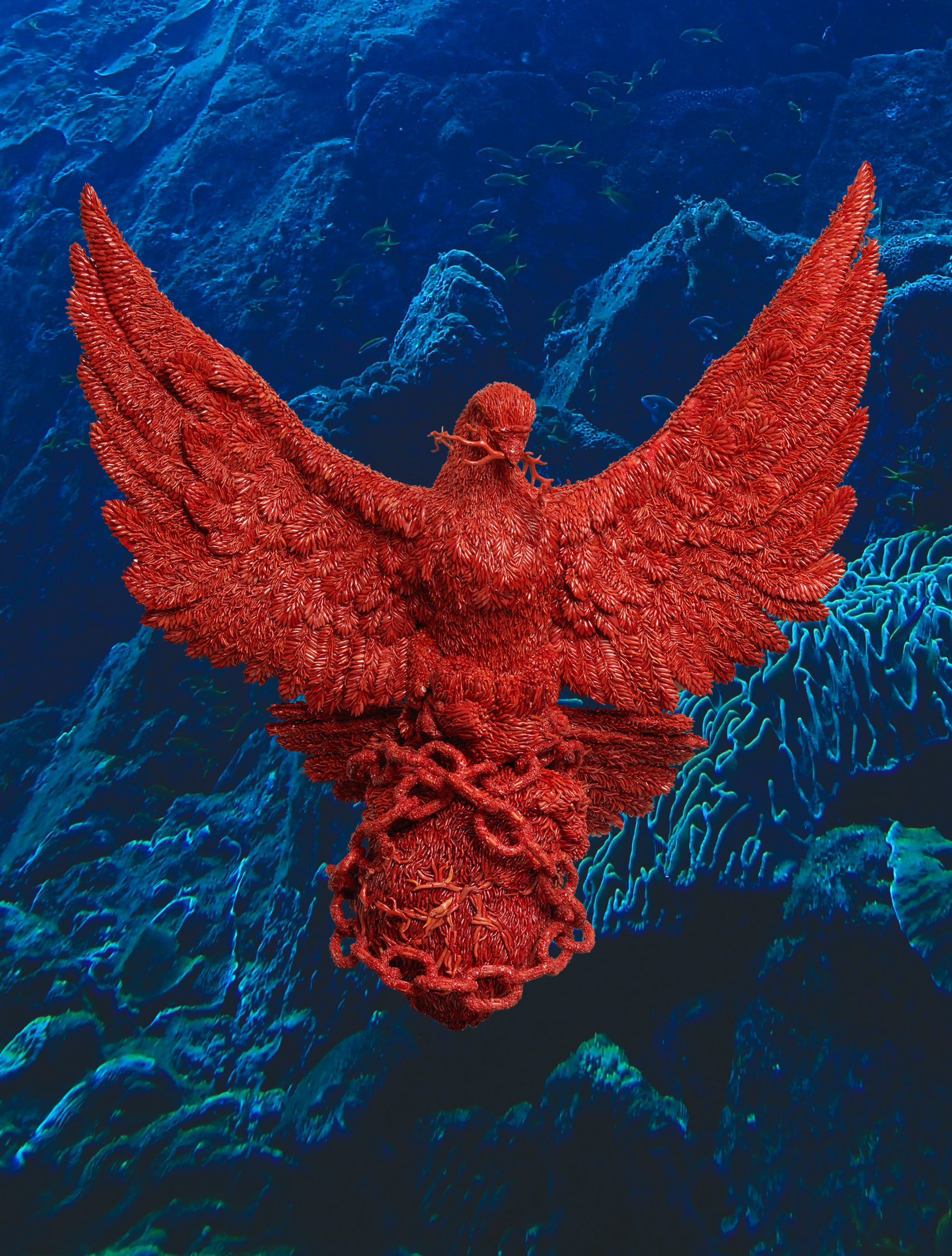
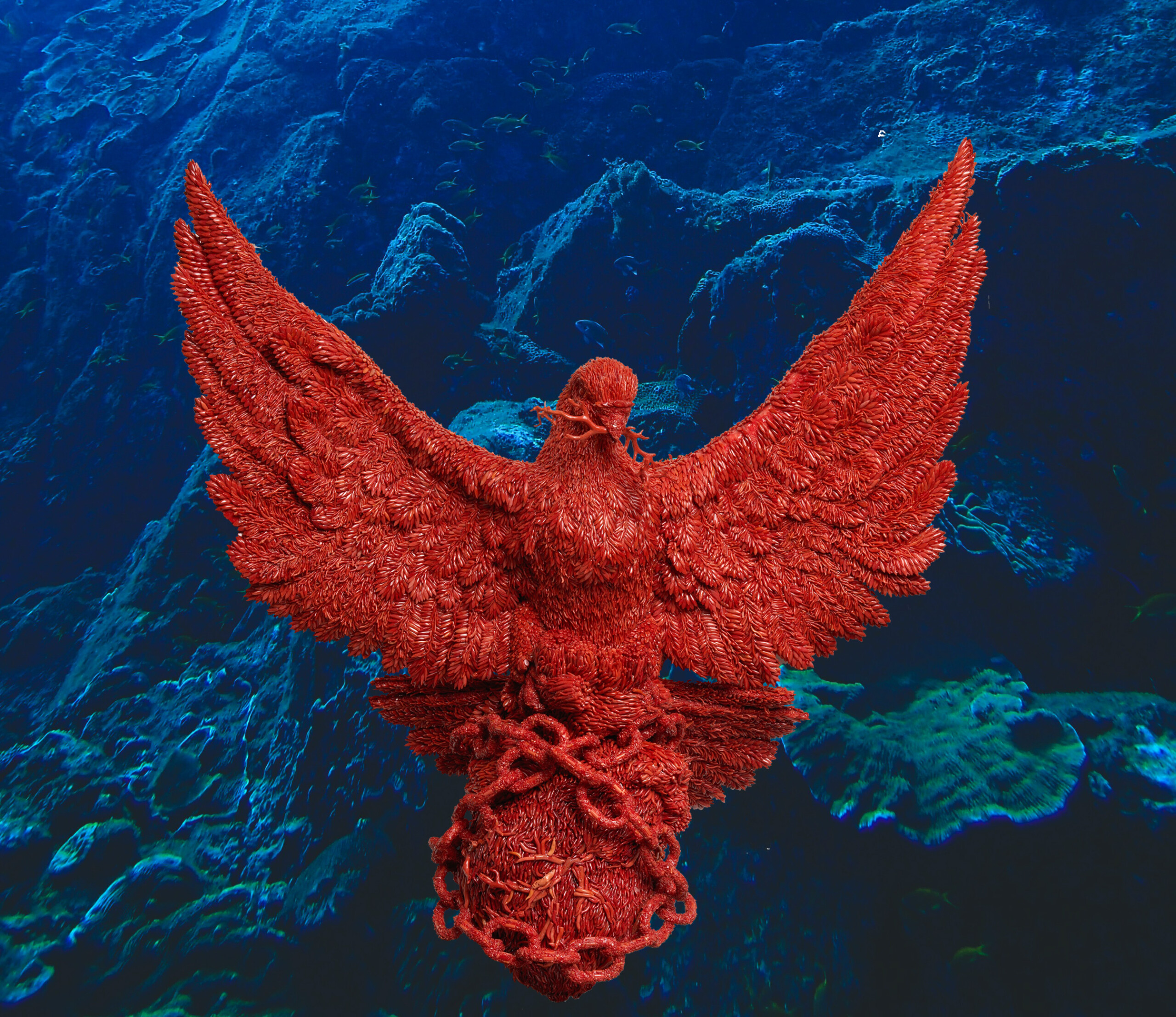
Coral sculpture by Jan Fabre agaanst backdrop of underwater photo by Nichika Sakurai on Unsplash.com.

Precious coral not only a heritage project,
but a living industry to grow and champion

By Vincenzo Liverino
President
Coral Commission

There are years that ask to be marked, and 2026 is one of them. One hundred years after the World Jewellery Confederation was founded in Paris, our organisation gathers for its Centenary Congress in Vicenza — and so, fittingly, it gathers in Italy. For those of us who have spent our lives with precious coral, this is more than a milestone on a calendar. It is a homecoming.

A century-old CIBJO is still relatively young when measured against precious coral, which humankind has gathered, traded and worked with for thousands of years. Yet there could be no more natural setting for the two stories to meet than the country where the congress is taking place, and the sea, where so much of that history was written.

In the conversations of recent years, the precious coral sector has rightly concentrated on responsible sourcing, on the science that underpins the material, and on the cultural inheritance it carries. But in this Centenary Year I want to add an argument that is sometimes left unspoken, and this is that precious coral is not only a heritage to be guarded, but a living industry that should be developed.

Even under the careful environmental protection it now enjoys, red coral remains a resource of genuine and rising value, and the knowledge needed to turn it into objects of beauty is concentrated, to a remarkable degree, in a handful of workshops in one Italian town — Torre del Greco.

That knowledge is an economic asset as much as a cultural one. It supports families, sustains an Italian town, and can — with the right encouragement — attract a new generation, provide skilled and dignified work, and evolve without losing what makes it singular.

This Special Report is dedicated to examining the Mediterranean cradle of the coral craft, the working economy that it still supports, the historic move to protect a name and a method through geographical indication, a new forum dedicated to the precious materials of the sea; the renewal of the workforce, precious coral’s growing presence on the world stage. and, finally, the part that CIBJO can play in championing all of it.

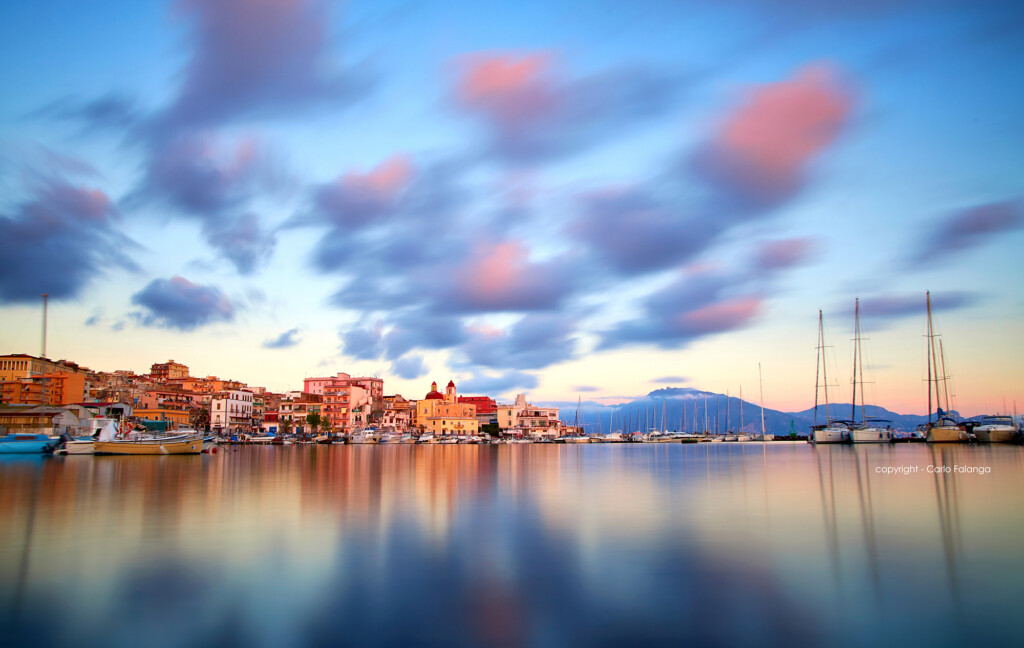
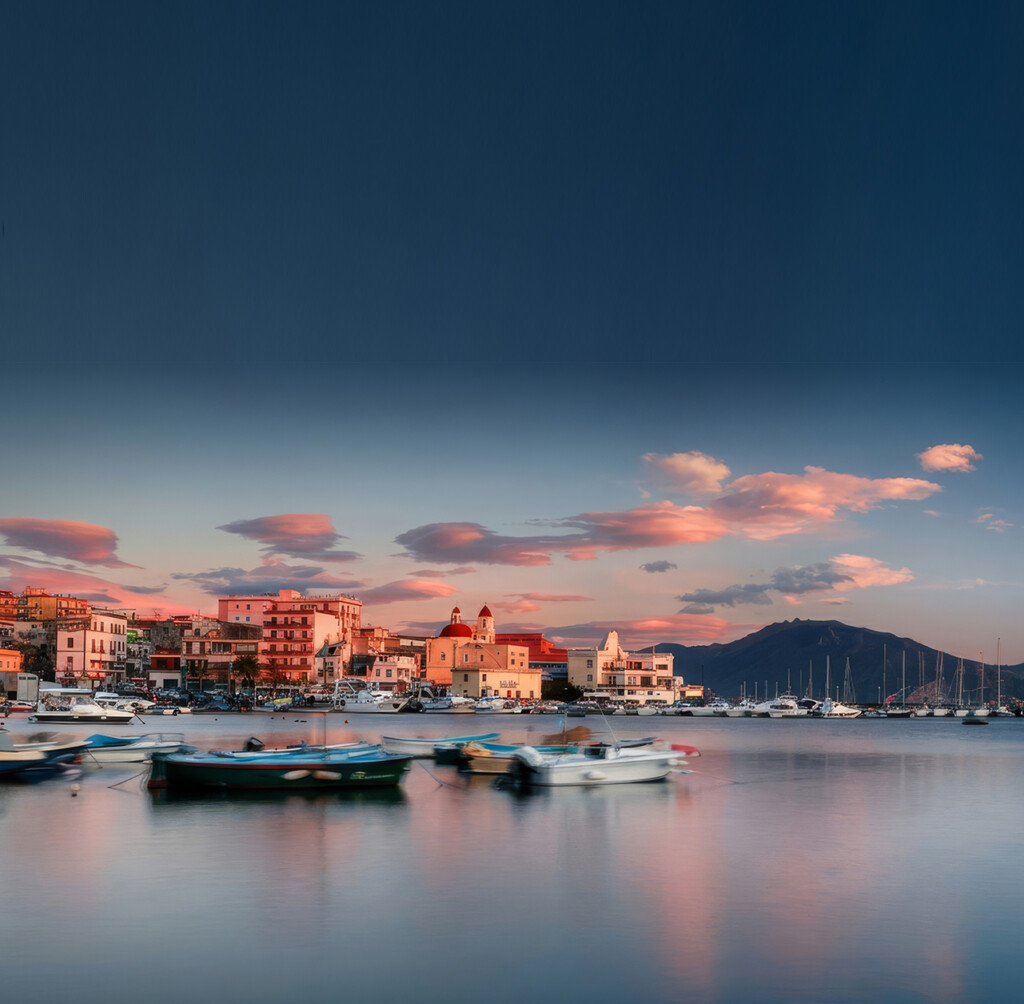
Torre del Greco, Italy, against the backdrop of Mount Vesuvius. (Photo: © Carlo Falanga)

The Mediterranean cradle

Red coral is not a creature of the bright, shallow gardens most people picture when they hear the word “coral.” Corallium rubrum grows slowly in cooler and deeper waters than reef coral, on the rocky walls and overhangs of the Mediterranean and the neighbouring Atlantic.

For the communities that learned to reach it, working coral became something close to a vocation, and from the 17th century onward its undisputed capital was Torre del Greco, a midsize town on the slopes between Vesuvius and the sea, just south of Naples. It’s a place that became so bound to the material that its people are known by it.

Torrese coral has never been a purely local affair. For centuries it travelled the long trade routes, reaching India in the classical and medieval worlds and moving across West Africa in the era of European expansion. Even today its beads and carvings serve markets as different as European high fashion, the ceremonial regalia of communities in the Niger Delta, and the souvenir trade, each prizing a different face of the same material.

And coral has always carried meaning as well as value — a guard against the evil eye, a sign of life and vitality in its blood-red colour, a recurring presence in Christian art beside the Madonna and Child, and, in its Italian home, “the summer jewel.”

None of this is a museum story. The hands, the families and the workshops are still here, which is precisely why holding the Centenary Congress in Italy feels, for our gem, like coming back to where it began.

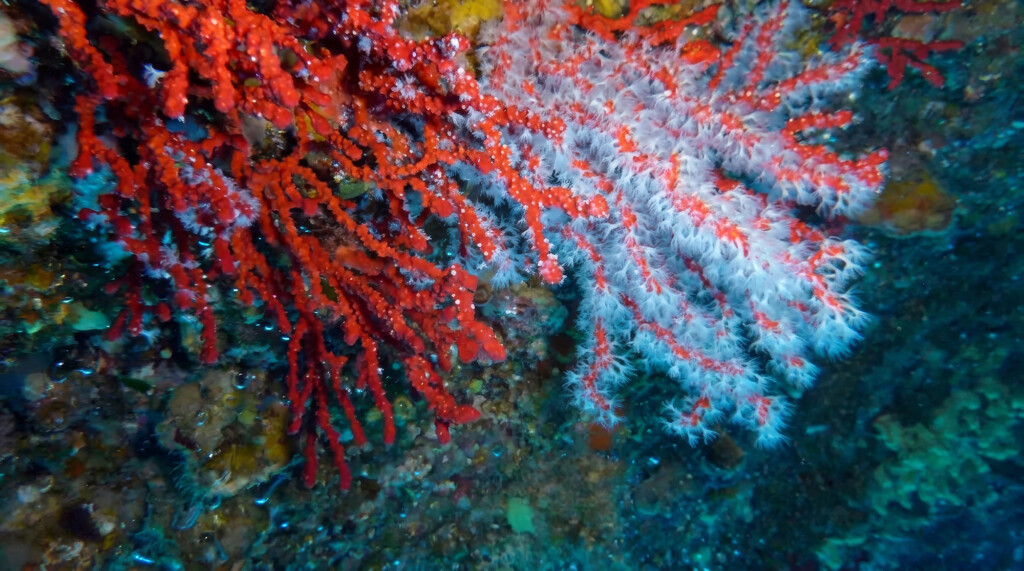
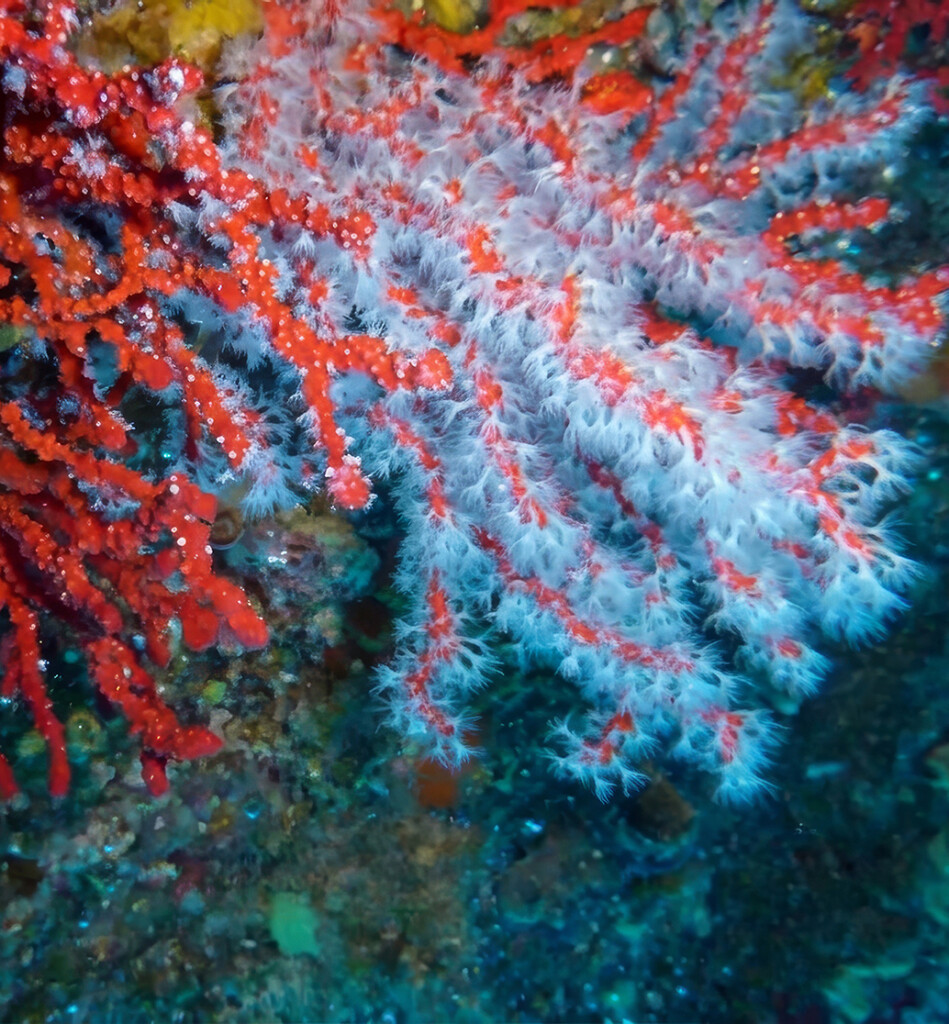
Corallium rubrum, native to the Mediterranean Sea and the neighbouring Atlantic Ocean.

A working heritage — the Torrese coral economy

It is easy to romanticise an old craft and forget that it is, first of all, a way for people to make a living.

Torre del Greco is exactly that. The town remains one of the foremost centres in the world for the working of coral, with numerous companies and workshops, and an economy oriented outward to international markets. Many of its houses are also its workshops, with the leading businesses having passed through four, five and six generations of the same families, with children learning to understand the material at their parents’ and grandparents’ benches long before they make a living from it.

What that learning buys is not easily replaced. Coral is worked almost entirely by hand, and a single small round bead may pass through a dozen distinct operations — cutting, sorting, rough and fine shaping, drilling, cleaning, polishing and stringing — before it is finished, with the finest strands representing many days of skilled work for each kilogram produced.

The same hands move fluently between the deep red of the Mediterranean and the pinks, whites and salmon tones of the Pacific species, and between smooth beads and cabochons on one side and carved cameos and sculptures on the other.

The value of precious coral, in other words, is not only in the rarity of the raw material. A great deal of it is added, here, by people.

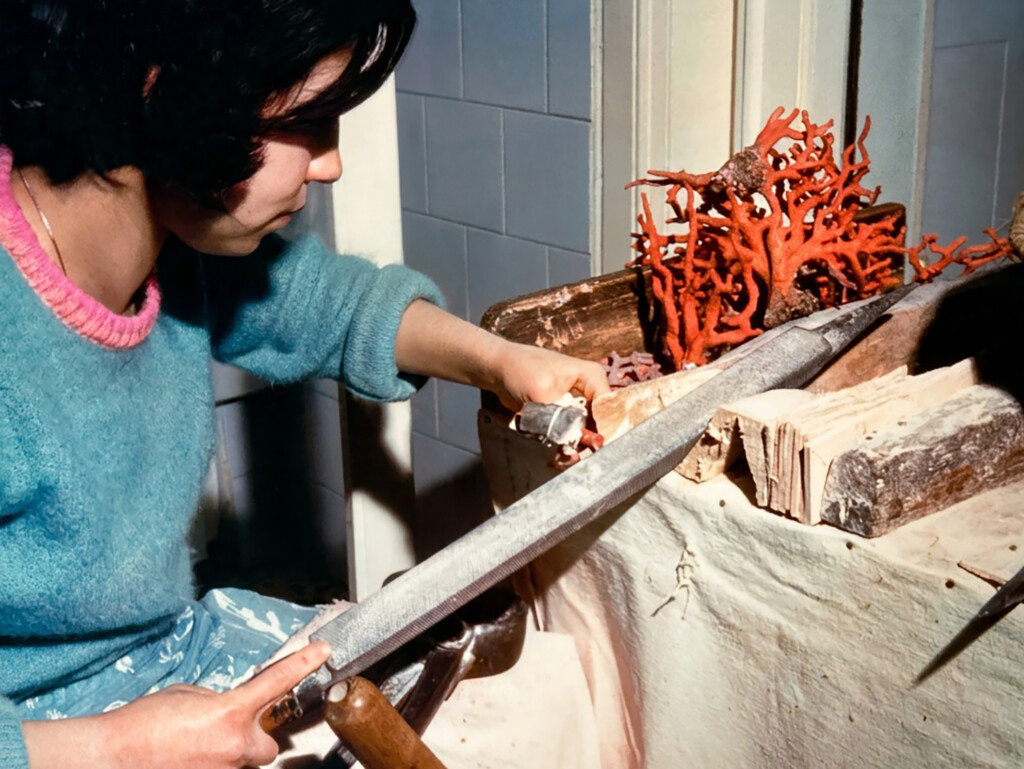
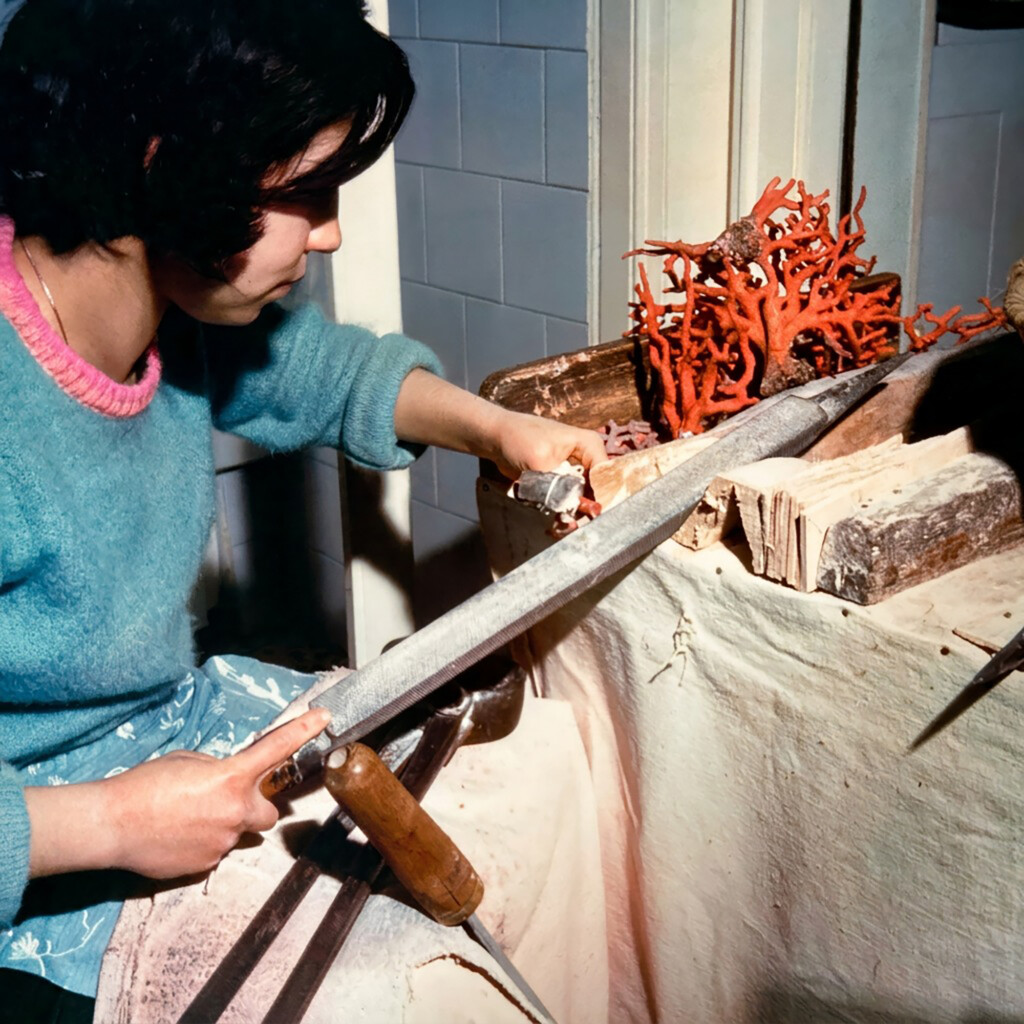
A coral worker. It is an industry where work continues to be largely manual.

From a collective mark to a geographical indication

The instinct to protect a name, a place and a method is not new to Torre del Greco. More than two decades ago, the town’s managers introduced a “Made in Torre del Greco” mark at the Vicenza jewellery trade fair, precisely to distinguish authentic local work from cheaper competition and defend it against it. In 2026 this has matured into something far stronger.

The European Union has extended geographical indication protection — a legal framework long familiar to the food and wine industries — to craft and industrial products, administered through the European Union Intellectual Property Office, with the application platform opening at the close of 2025.

For the first time, a name tied to a place and a way of making can be protected for objects that are worked rather than grown. The coral and cameos of Torre del Greco stand among the very first Italian craft traditions to seek this status, in distinguished company that includes the glass of Murano and the lace of Burano.

To carry the candidacy forward, the town of Torre del Greco formed the Consorzio Corallo e Cammeo Torrese, which has already secured national recognition on the strength of two separate specifications — one for coral, one for cameos — with the support of Assocoral, the national association of coral, cameos and related-materials producers. The effort now moves toward the European stage.


For the Coral Commission, the appeal is clear, and it is economic as much as cultural. A protected geographical indication anchors a name to a defined territory and an authenticated method. It provides the consumer with a verifiable mark of origin and genuine craftsmanship. It it shields genuine work against imitations, and in doing so defends its value, and the jobs of the people who make it. It is the natural complement to the scientific traceability the commission has reported on in recent years — from species identification by DNA to documentation along the supply chain.

A new forum for the precious materials of the sea

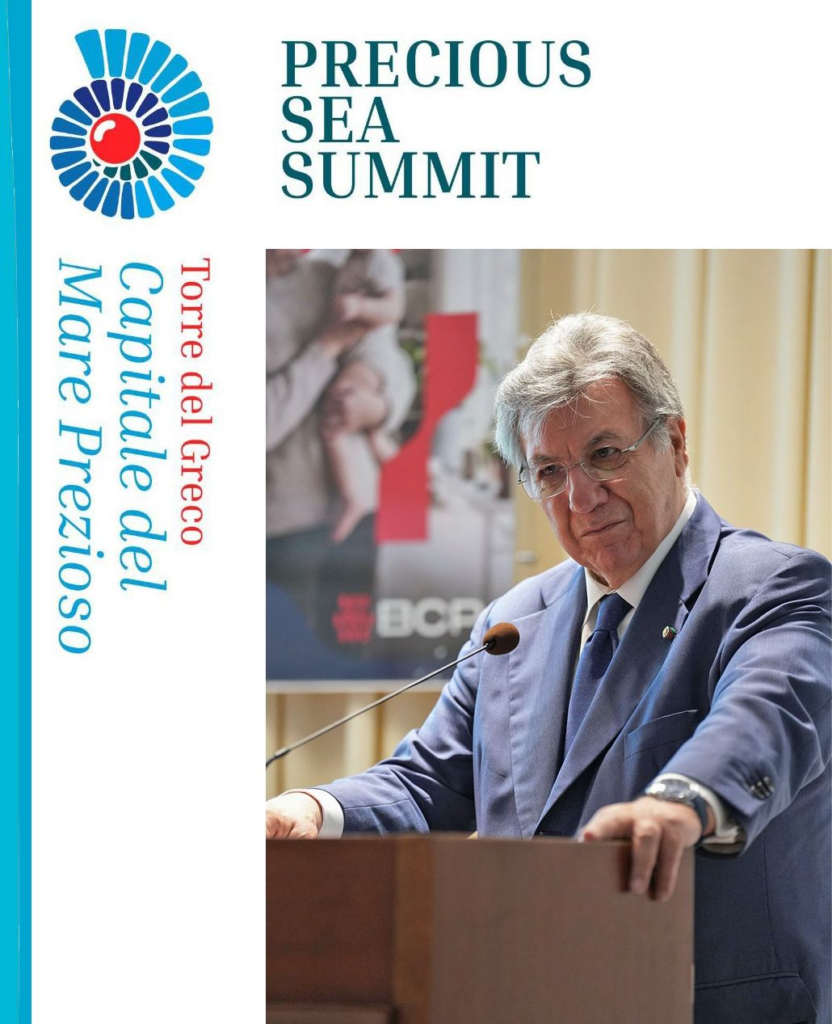
On 21 May 2026, Torre del Greco hosted the first edition of the Precious Sea Summit — the inaugural gathering devoted specifically to the precious organic materials of the sea.

Coral and cameos sat at its centre, but the conversation widened to include mother-of-pearl, shell and pearl of every type and origin, reflecting the full family of marine treasures that the jewellery world draws upon.

The Summit was convened by Assocoral together with the Italian Exhibition Group — the organiser of VICENZAORO — and the Consorzio Corallo e Cammeo Torrese, with CIBJO as its principal international partner. It also had and the backing of Italian trade and institutional bodies.

The summit’s agenda read almost as a summary of this sector’s own priorities: traceability, the protection of marine resources, the safeguarding of ancient professions, and, at the heart of it all, the place of young people in carrying that knowledge forward.

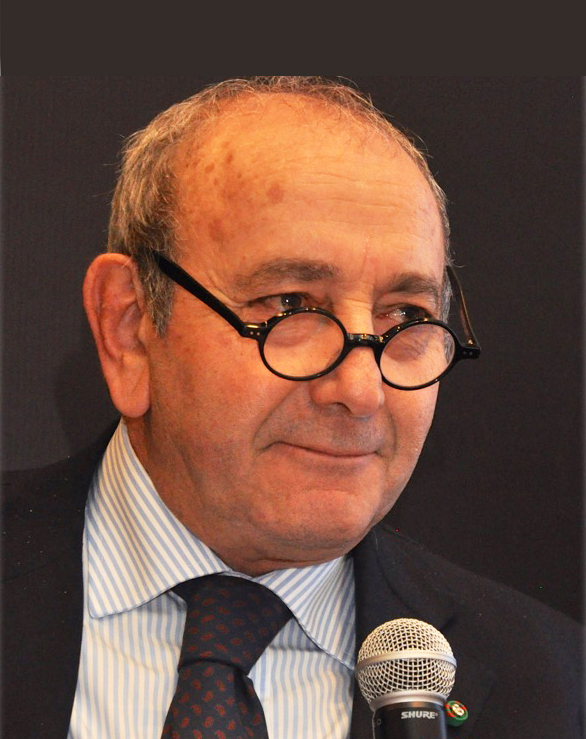
Speaking as president of CIBJO, Dr. Gaetano Cavalieri framed the value of coral in terms that go well beyond price. The worth of the material, he argued, is measured in the quality of the businesses that handle it, in the tradition carried by artisan families, and in the sector’s ability to hold beauty, ethics and responsibility toward the sea together. It is an emblem, in his words, of how a strong local identity and global competitiveness can reinforce one another.

What matters most about the Precious Sea Summit, for our purposes, is its ambition: to give a production district a permanent platform connected to the international marketplace, and to do so on an annual basis.

CIBJO President Gaetano Cavalieri addressing the first Precious Sea Summit in Torre del Greco. “The value of coral,” he said, “is measured not only in economic terms, but in the quality of the businesses, the tradition of the artisan families, and the ability to combine beauty, ethics, and responsibility toward the sea.”

Educating the next generation

The difficulty of drawing young people into demanding artisanal work is real, and it is felt acutely in a field where so few people are able to pass the necessary skills on. But it is far from hopeless.

Torre del Greco’s Francesco Degni State Art School continues to train young engravers and coral workers, and vocational initiatives across the district are bringing new hands to the bench. Crucially, renewal does not mean discarding the hand-skill that defines the craft— it means giving it new reasons to attract talent.

An industry that offers young people good training, modern tools, creative scope and a protected, prestigious product is one they will choose to join. That is how skills survive — not by preservation alone, but by remaining a living, rewarding profession.

 That the story of precious coral resonates far beyond the Mediterranean is demonstrated with particular force by the exhibition currently on view in Hong Kong. L’École, School of Jewelry Arts — established with the support of Van Cleef & Arpels — is presenting Precious Coral, from Curiosity to Treasures at its K11 MUSEA campus from 23 May to 11 October 2026, bringing together approximately 120 jewellery creations and exceptional specimens on loan from distinguished collections and institutions, making it the most significant exhibition the campus has mounted to date.

Material being displayed have come from institutions including the Coral Museum–Liverino Collection in Italy, as well as the Cartier Collection, the Van Cleef & Arpels Collection and several distinguished private lenders

The exhibition examines its subject through three lenses — biology and gemmology, craftsmanship, and history.

For the Coral Commission, the significance of this program is not merely curatorial. When a school of jewellery arts chooses precious coral as the centrepiece of its most ambitious Hong Kong presentation to date, it signals that the material’s cultural authority is alive and growing in the very markets that matter most to our sector’s future.

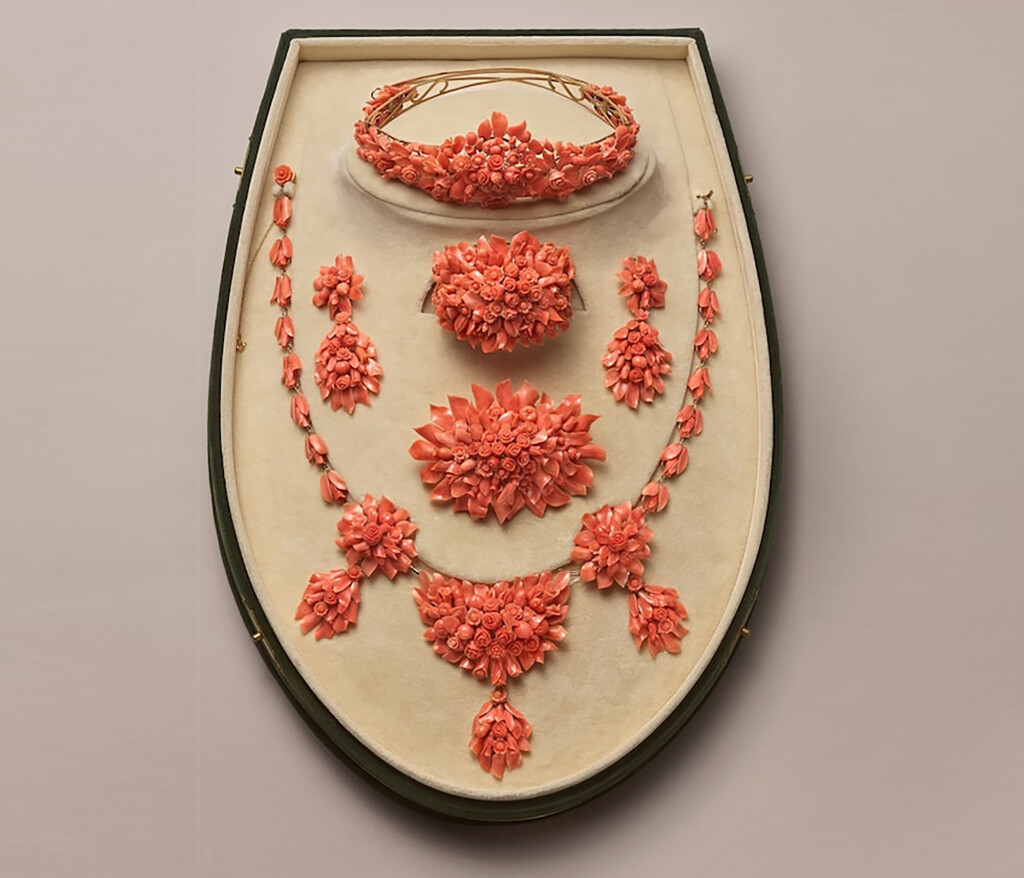
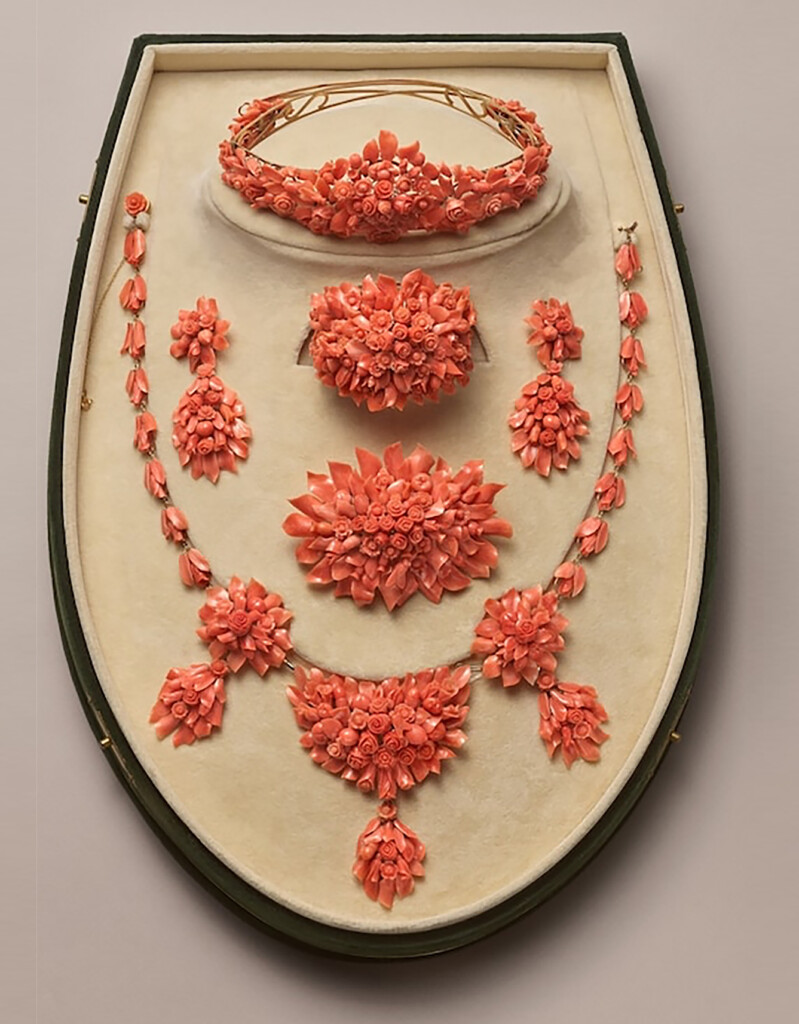
The Queen of Naples Carolina Bonaparte Sciacca Parure, from the Enzo Liverino Collection.

Research into the biology of coral

Research also continues. In late 2025, Chanel announced it was extending its partnership with the Monaco Scientific Center for a further six years, renewing a collaboration first initiated in 2019 that created a dedicated research unit focused on the biology of Mediterranean red coral. The scientific programme aims to deepen understanding of how Corallium rubrum grows and develops its characteristic hue.

Since it was established, the research unit has produced around 20 peer-reviewed scientific articles covering little-explored biological mechanisms, micro-organisms associated with red coral, and the effects of environmental change.

The coming phase will focus on fundamental biology, the broader ecosystem surrounding the species, and the development of reproduction techniques.

CIBJO’s role in championing a living industry

The World Jewellery Confederation has spent a century giving the trade a common language and common standards, and that work is the foundation on which everything above rests.

The Coral Blue Book remains the trade’s definitive reference for the definitions and nomenclature of our material, and the guides built around it translate those standards for customs officers, educators and consumers alike. This is the indispensable groundwork — clear terminology, an honest distinction between precious and reef corals, and trust grounded in fact.

But in this Centenary year the Coral Commission also commits to a more active role. As the only jewellery-sector organisation holding special consultative status with the United Nations Economic and Social Council, and a member of the UN Global Compact, CIBJO is formally engaged with the Sustainable Development Goals — including those on decent work and economic growth, sustainable communities, and responsible production.

That mandate is precisely why CIBJO is well placed to champion the livelihoods of people involved in this ancient craft. In doing so we are defending skilled jobs, intergenerational know-how and a responsibly managed marine resource.