CIBJO Congress 2026 – Coloured StonesSteven Benson2026-07-20T16:50:52+02:00
SPECIAL REPORT
COLOURED STONES
Photo credit: Abdul Matloob on Pexels.com.
Creating strict language boundaries in the interest of consumer clarity
By Charles Abouchar President CIBJO Coloured Stone Commission
This year we celebrate the centenary of the World Jewellery Conferation, or as it generally known – CIBJO, which is derived from the French acronym, Confédération Internationale de la Bijouterie, Joaillerie, Orfèvrerie des Diamants, Perles et Pierres. It began life in 1926 as an association by the name of BIBOA (Bureau International des Associations de la Bijouterie, de l’Orfèvrerie et de l’Argenterie), which was developed to represent and advance the interests of the jewellery trade in Europe. Its restructuring into the global body that CIBJO is today occurred in 1961.
CIBJO printed its first protocol for terminology and trade practices in 1968 and ever since then the Coloured Stone Commission has played a front and centre role in developing global nomenclature standards. The ultimate goal remains protecting consumer confidence through the adoption of clear and descriptive language that transparently informs.
The Gemstone Blue Book, for which the Coloured Stone Commission is today responsible, developed out of the original 1968 combined terminology “Blue Book.” It continues to evolve as the industry develops, with commission members meeting not only at congresses, but considerably more frequently though remote video conferences, messaging and e-mail communications throughout the year.
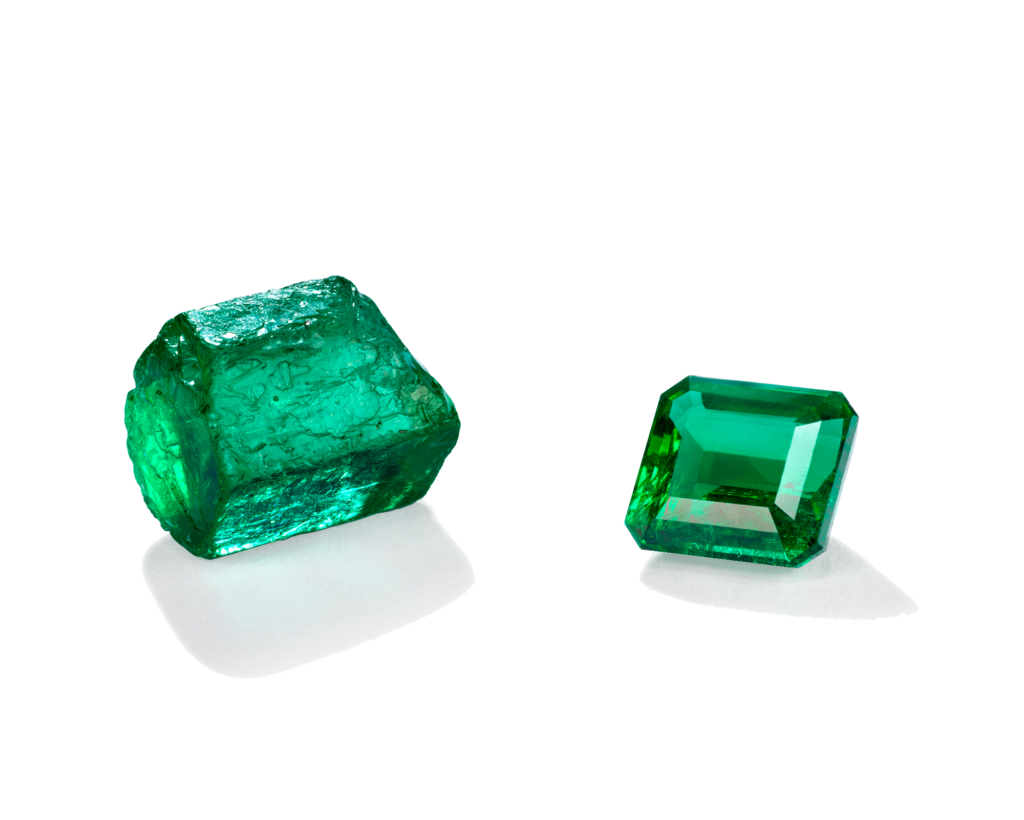
Rough and polished Zambian emeralds (Photo credit: Gemfields)
‘Synthetic’ as an unambiguous descriptive term
Since the 2025 CIBJO Congress in Paris,the content of Gemstone Blue Book has been going through its periodic revision. The Commission members have once again examined the content in detail and sought to clarify, wherever necessary, the language used.
At the forefront of the deliberations during the past year has been the industry adoption, in recent times, of the terms “laboratory grown” and “laboratory created” – terms which were born out of the synthetic diamond industry and their adoption in the United States by the Federal Trade Commission (FTC). After much deliberation, and in particular from the coloured stone industry’s perspective, it became clear that neither of these terms accurately described the products to which they had been applied, whereas the term “synthetic” was unambiguously clear.
Therefore the Commission has moved to eliminate the terms “laboratory grown” and “laboratory created” from the acceptable language used to describe synthetic gemstones within the Gemstone Book. Only the term “synthetic” will be permitted from September 2026 onwards to describe “artificial products having essentially the same chemical composition, physical properties and structure as that of their naturally occurring counterparts.”
In making this move it is hoped that the situation in the market will become clearer and the consumer will be properly informed.
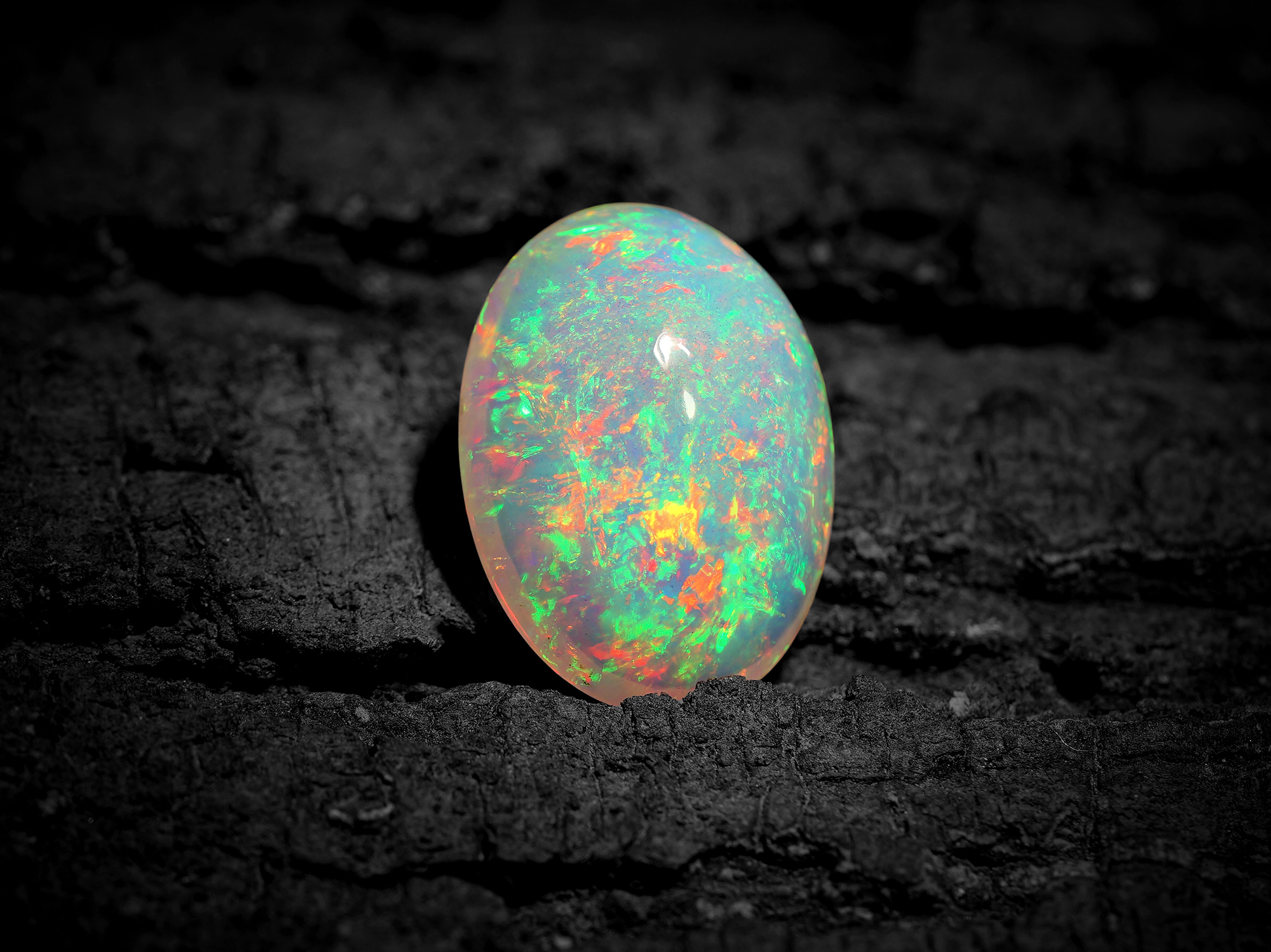
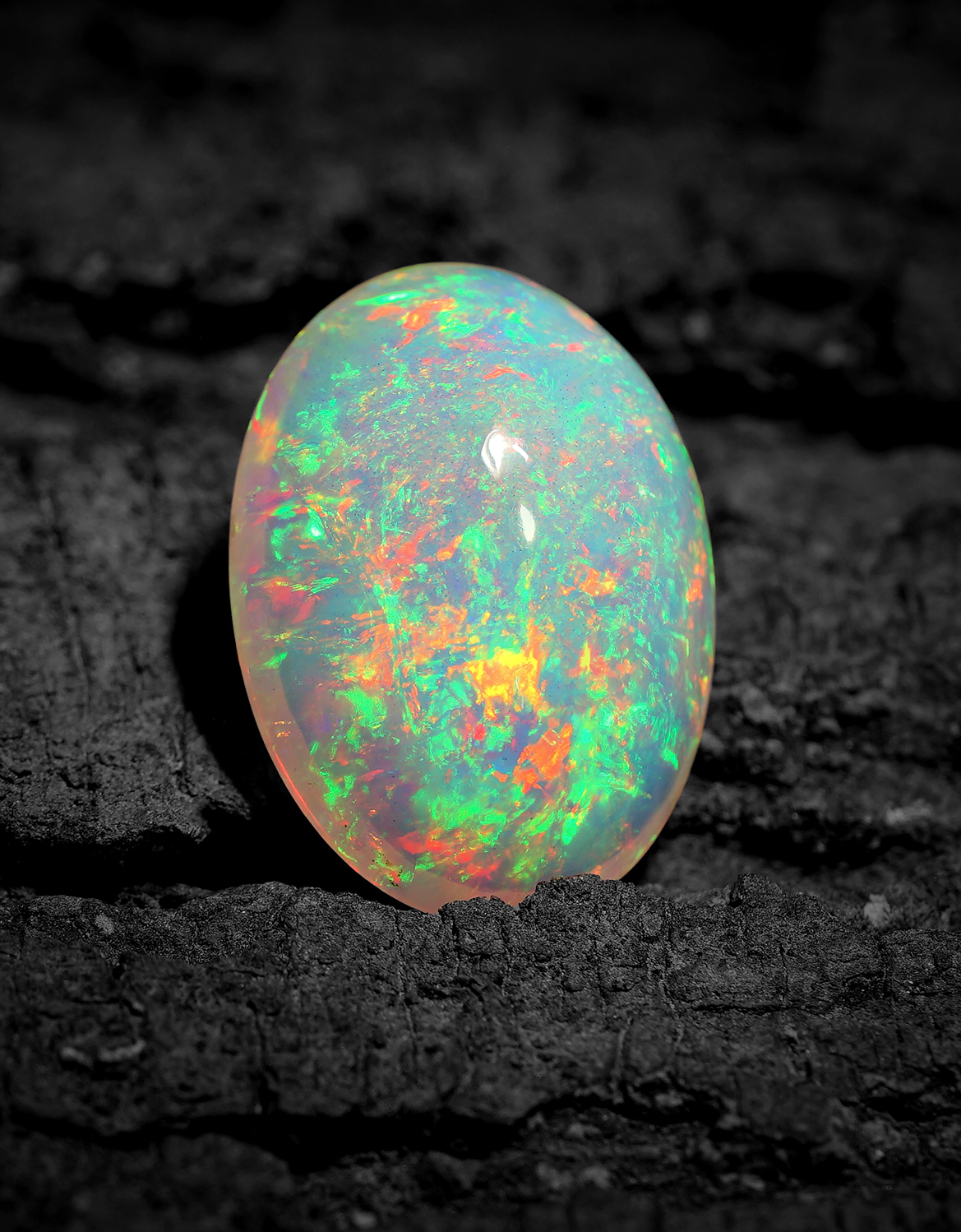
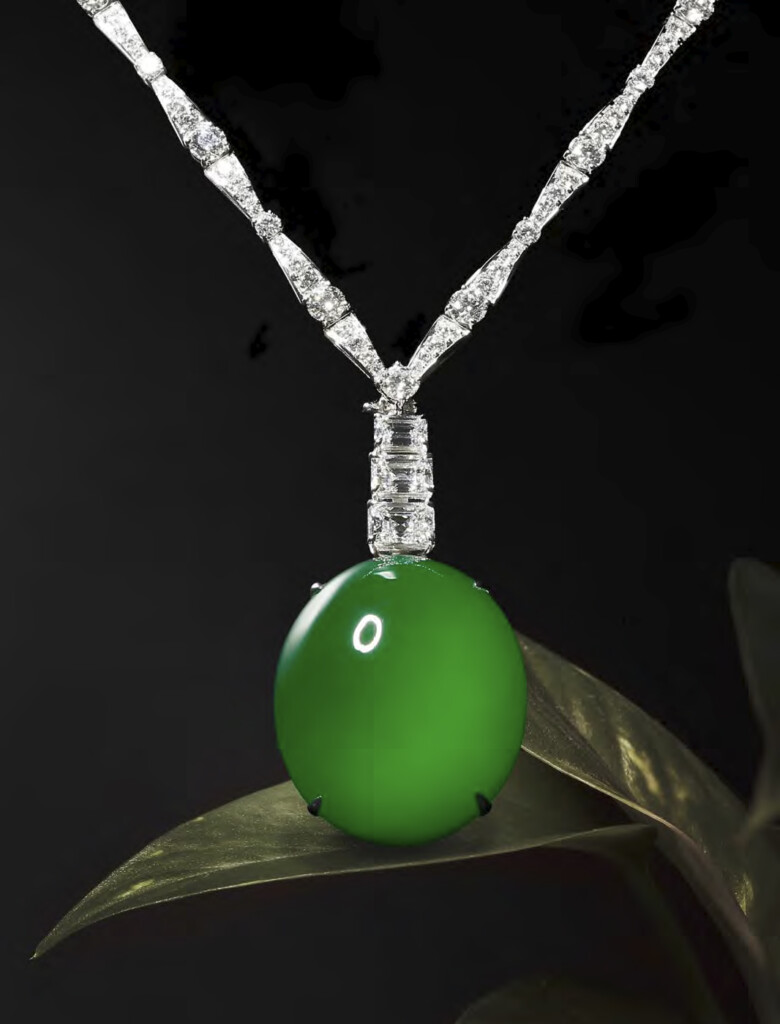
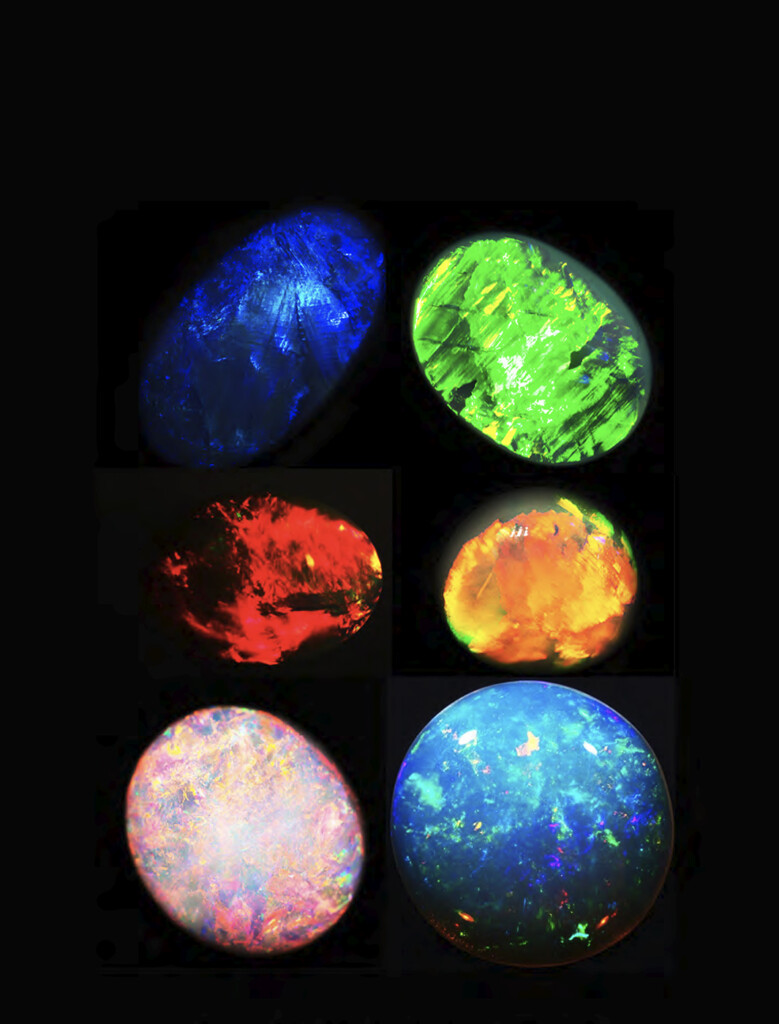
Illustrations from the new Jade/Fei Cui Guide (left) and Opal Guide. (Photo credits: Stanley Chu of On Tung Jewellery Co. Ltd, left, and Black Opal Direct, right.)
New opal and jade guides
Apart from the Blue Book revisions the Coloured Stone Commission has very active over the last year on other related projects.
The Commission and its working groups for opal and jade have successfully and respectively completed new guides for opal and jade/Fei Cui. These will be presented during the 2026 congress in Vicenza, and I am very positive that they will be available online on the CIBJO website very soon.
The two guides give detailed descriptions of the materials ,covering all the correct definitions and characterisations along with illustrations and other imaging of that helps both the industry and the consumer understand the products in a manner that was not available before.
Furthermore, since beginning of this year, a new working proup has been begun operating. It was formed with the goal of assembling enough common information to produce a Valuations Guide. This enthusiastic group is greatly challenged, since it is tasked with a job that requires consideration all the potential differences across the globe. We wish it well in its deliberations over the coming year.
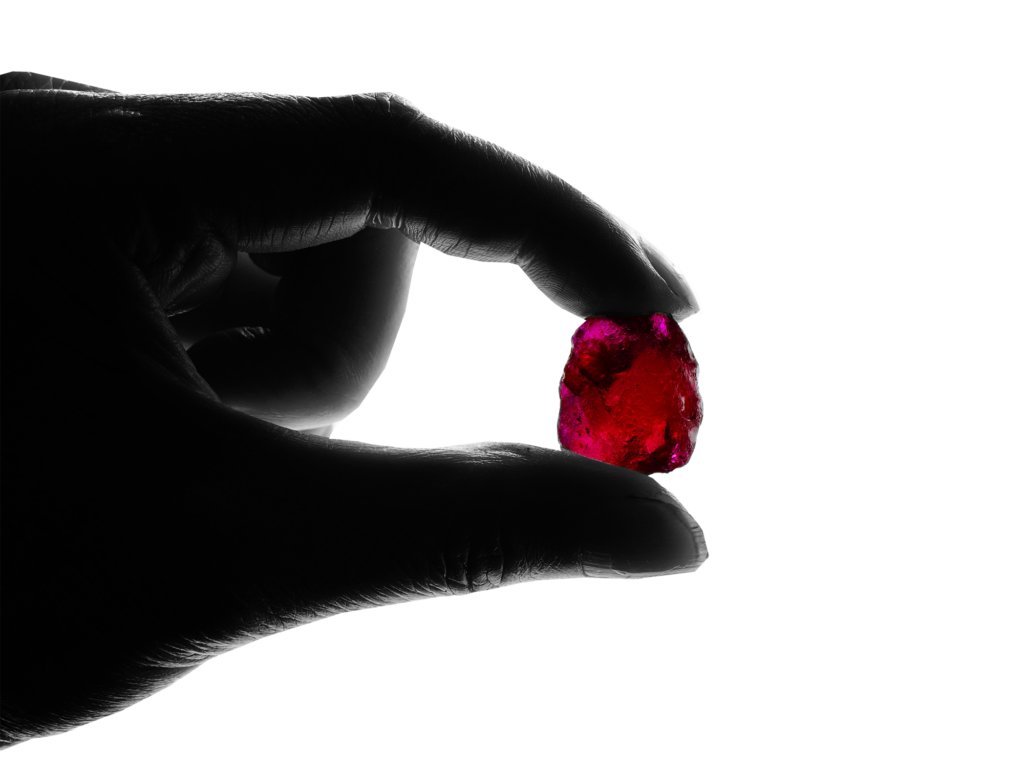
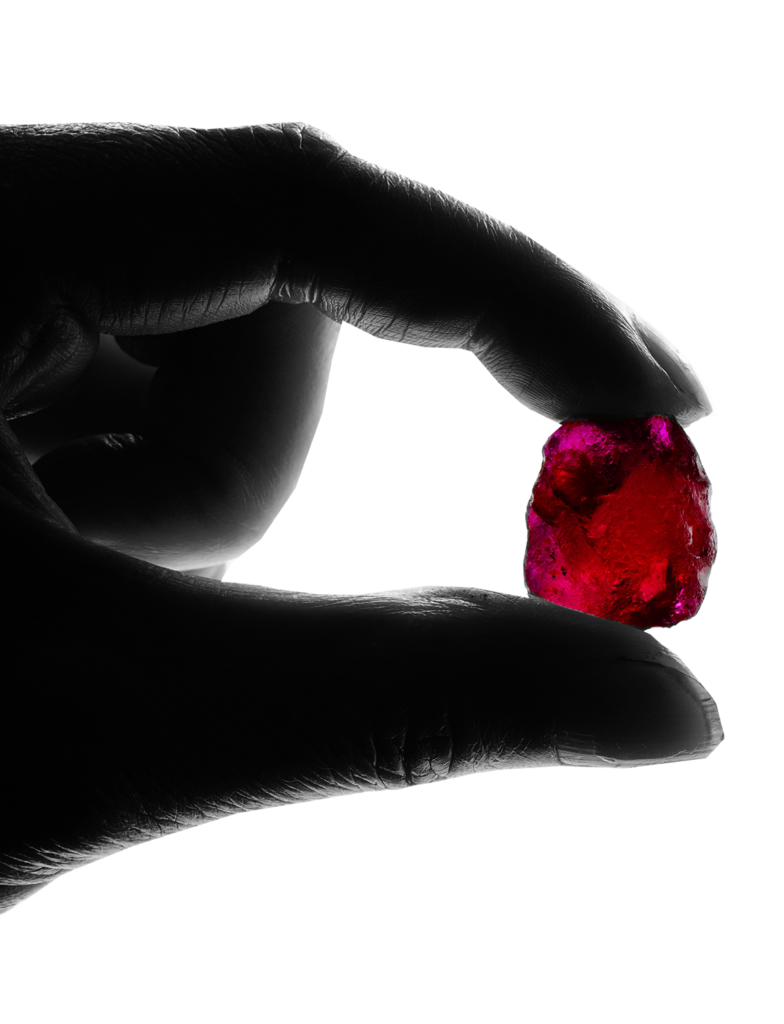
A 36-carat rough Mozambican ruby. (Photo credit: Gemfields)
The unregulated use of ‘fancy’ names
There are are elements that concern us, but not all the news is bad. I have been very surprised for example that, despite the politically complicated situation around the world and the tariffs in the U.S. market over the past year, the coloured stone sector has emerged relatively well. We will need to wait as to see how the next steps of the U.S .tariff rounds will have an impact on our trade.
Another issue concerning our trade, is the fact that most gemmological laboratories use “fancy” names to describe the colours of a stone in their reports. Traditionally we had just a few names used in the trade, like pigeon blood for rubies, royal blue or cornflower blue for sapphires and padparadscha for orangy pink sapphires. However, even with these traditional terms there is no international standard applied. As a consequence,, depending on the laboratory there is a wide variation in colour being described for the same term.
If a ruby is given a colour description “pigeon blood” in a laboratory report, it will command a premium price in the market, the client, not aware that it is not an international standard, may pay an unjustified price. In addition, today the market is flooded with new names for colours every year, and I feel that this increase of names is only for the good of the laboratories and some clever dealers.
Having spoken with many persons from the trade about this issue, I realise that most of them see the problem and understand the difficulty it represents for consumer protection. Most agree that we should discourage the usage of these terms, or if used they should be clearly presented on the reports as being the opinion of the laboratory.
My wish would be that CIBJO could take care of this issue, but I am well aware that this is a very difficult problem to solve.